
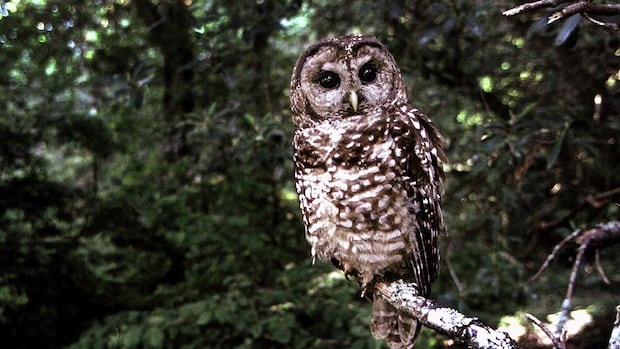
Wild northern spotted owls may no longer exist in British Columbia, as the last sighting was in 2023 after a sharp decline in their population. Chief Janice Kuester of Spuzzum First Nation expressed deep sorrow over this loss, emphasizing the significant role these owls played as knowledge keepers and ancestors within their community.
Since 2022, the Spuzzum First Nation has collaborated with the province to assist in the conservation and recovery efforts for the owls. While the species still thrives in the United States, with thousands present, the Canadian population is on the verge of extinction, lacking individuals that have completed their life cycle in the old growth forest.
Despite this grim situation, there is still hope for the species. Biologist Jared Hobbs believes that reintroducing the owls in British Columbia is feasible if efforts to preserve their habitat are prioritized. The Northern Spotted Owl Breeding Program in B.C. is actively breeding and releasing these owls back into the wild, with a goal of establishing a stable population of 250 individuals.
Conservationists stress the importance of identifying and safeguarding critical habitat in British Columbia to prevent further harm to the species. The biggest threats faced by spotted owls are habitat loss due to logging and competition from the barred owl species. While the U.S. has initiated culling programs to aid spotted owl recovery, Canada has not implemented similar large-scale measures.
The story of the northern spotted owls symbolizes the global struggle faced by numerous endangered species due to human activities. Despite the challenges, the collaborative efforts of the breeding facility and Indigenous communities offer a beacon of hope for the species’ survival, highlighting a rare positive narrative in the current environmental crisis.