
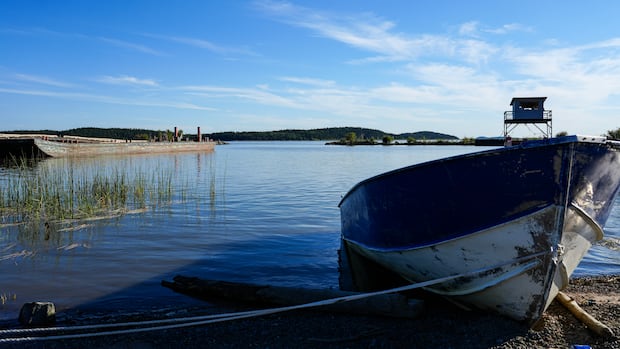
After continuous requests from local residents spanning more than twenty years, a federally financed investigation is set to commence to assess the health repercussions of oilsands operations on the inhabitants of Fort Chipewyan, an Indigenous community in northern Alberta. Situated over 200 kilometers north of Fort McMurray, many community members have long suspected a connection between cancer cases in Fort Chipewyan and the industrial activities upstream along the Athabasca River.
Imperial Oil’s Kearl mine, the site of a significant 5.3-million-litre wastewater spill in 2023, is approximately 140 kilometers away from Fort Chipewyan. The nearest project, Suncor Energy’s Fort Hills mine, is over 90 kilometers distant.
The research will analyze both current and historical health data, investigate local disease patterns, and monitor both the residents and the environment. Additionally, it will assess how environmental alterations impact the community’s heritage and daily routines.
Ruby Ladouceur, president of the Fort Chipewyan Métis Nation, emphasized the need for clarity: “We’re not assigning blame; we simply seek understanding of the situation. We can’t definitively attribute everything to industrial activities without evidence to support it.”
The study, named Project Monument Hill after a local viewpoint overlooking Fort Chipewyan and Lake Athabasca, will span ten years and cost $12 million. It was introduced by the federal government in August 2024, with initial funding allocated in March for the planning and governance phase.
Ladouceur highlighted that the study’s approach will integrate both western scientific methods and Indigenous insights into the land. She stated, “Our objective is to enhance comprehension of the correlation between environmental conditions, traditional land usage, and the health and welfare of our people. The interconnection between environmental health and human well-being is undeniable.”
Notably, Alberta currently lacks community-specific cancer statistics for rural areas within the Regional Municipality of Wood Buffalo (RMWB) and other regions in northern Alberta. Instead, it maintains only general or regional data to preserve privacy and ensure accurate trend interpretation, as noted by a representative from Alberta Primary and Preventative Health Services.
While acknowledging the tardiness of the study, Dr. John O’Connor, a long-time advocate for addressing cancer concerns in Fort Chipewyan, expressed his satisfaction with the investigation’s initiation. However, he raised concerns about the decade-long timeline, emphasizing the need for a quicker resolution due to the alarming number of cases he has encountered as a physician.
Past reports focusing on cancer occurrences in Fort Chipewyan primarily examined medical records and health trends of current residents, neglecting individuals who had relocated, including those seeking cancer treatments. A 2009 study from the Alberta Cancer Board revealed that some cancers in Fort Chipewyan were approximately 30% higher than the provincial average at that time.
In 2014, researchers from the University of Manitoba detected heavy metals and industrial contaminants in plants and animals commonly consumed by Fort Chipewyan residents, with some concentrations posing health hazards. Dr. James Talbot’s 2014 report highlighted higher-than-expected instances of certain cancers in Fort Chipewyan from 1992 to 2011 but did not find conclusive evidence linking them to industrial exposure.
Ladouceur emphasized that the new study aims to assess the impact of environmental changes on Indigenous health and community, focusing on factors beyond lifestyle influences. Callie Davies-Flett underlined the scarcity of publicly available data concerning the connection between cancer in Fort Chipewyan and alterations to the environment caused by oilsands activities, emphasizing the widespread impact within the community based on longstanding testimonies from elders and community members.