
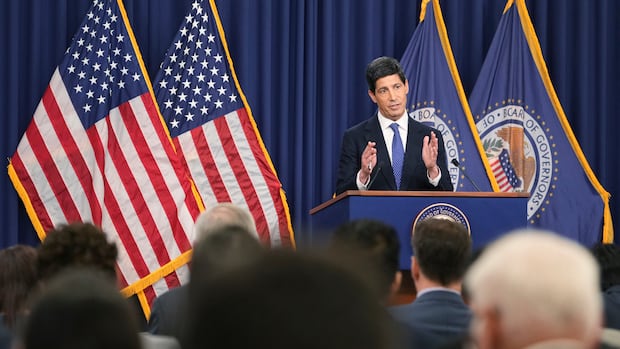
The U.S. Federal Reserve increased its benchmark interest rate on Wednesday for the first time since 2023 to combat persistent high inflation and hinted at the possibility of another rate hike later in the year.
This quarter-point raise brings the Fed’s key rate to approximately 3.9 percent and could eventually lead to increased borrowing expenses for American mortgages, auto loans, and credit cards. The decision comes at a time when Americans are already grappling with elevated costs for essential items such as groceries, fuel, and housing, with affordability becoming a key issue ahead of the upcoming midterm elections.
In its quarterly projections, the Fed indicated that its rate-setting committee foresees a second rate hike later in the year, potentially reaching 4.1 percent. Fed Chair Kevin Warsh, appointed by President Donald Trump, highlighted the economy’s acceleration since the previous rate decision in July and emphasized the prolonged high inflation, stating that inflation levels have been excessively elevated.
Warsh stressed the necessity of addressing the persistently high inflation, attributing the decision to hike rates to the need for a speedier return to the Fed’s two percent inflation target. The ongoing tensions between the U.S. and Iran, resulting in increased gas prices, were also cited as a contributing factor to the Fed’s stance on rate hikes.
The rate hike marks a notable shift for Warsh, who previously hinted at the possibility of reducing the key rate. Despite past suggestions aligning with Trump’s call for lower borrowing costs, Warsh has reaffirmed the Fed’s commitment to curbing inflation based on data-driven assessments.
The current geopolitical uncertainties, particularly stemming from the Iran conflict and the consequent rise in gas prices, pose risks to broader inflation levels. Recent inflation data revealed a year-over-year inflation rate of 3.7 percent in July, with core prices witnessing a slight uptick in August.
Although consumer sentiment surveys indicate a pessimistic outlook on the economy, robust retail sales figures suggest that consumer spending remains resilient, indicating that current interest rates may not be exerting sufficient pressure to cool inflation. Wall Street investors anticipate further rate hikes, with projections indicating additional increases in December and March.
Unlike the U.S., Canada may not face immediate pressure to follow suit with rate hikes, as the two countries’ central banks adjust interest rates based on their respective economic challenges. The inflationary pressures in Canada, primarily driven by escalating energy prices due to the Iran conflict, have led to an inflation rate of three percent in August, exceeding the Bank of Canada’s two percent target.
While the U.S. grapples with more pronounced underlying inflation concerns, Canada’s inflation metrics remain relatively lower, mitigating the urgency for rate adjustments. The RBC Economics forecast aligns with this view, projecting that the Bank of Canada is unlikely to raise rates until 2027, despite inflationary pressures and rising bond yields affecting both countries differently.