
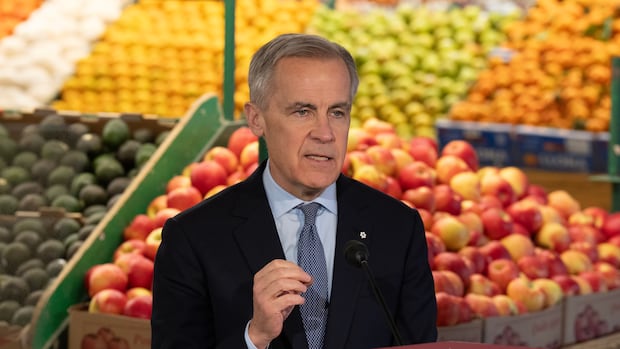
Food prices in Canada have been on the rise, with grocery prices increasing by over 30% since 2020, as per recent Statistics Canada data. To address this issue, Prime Minister Mark Carney unveiled a series of affordability measures, including the Canada Groceries and Essentials Benefit.
The parliamentary budget officer estimated that implementing these measures, which involve increasing the GST credit and providing a one-time payment to Canadians, will cost the federal government approximately $12.4 billion over five years. The one-time payment is projected to exceed $3 billion this year, with annual costs ranging from $1.7 billion to $1.9 billion until 2031.
The new benefit will offer low- and modest-income Canadians eligible for the GST rebate a one-time increase, raising the annual amount for a family of four from $1,100 to $1,890 and for an individual from $540 to $950. Additionally, starting in 2026-27, the GST rebate will see a 25% boost for the next five years, providing families with up to $1,400 annually and individuals about $700 per year.
Conservative Leader Pierre Poilievre, while calling the measure a temporary fix, pledged his party’s support to fast-track the legislation, despite concerns that it does not address the root cause of escalating prices. Approximately a quarter of Canadians live in food-insecure households, with inadequate access to food due to financial constraints, according to Food Banks Canada.
Experts suggest that targeted measures like the rebate could help alleviate financial pressure on lower-income individuals, especially in the face of stagnant minimum wages. Finance Minister François-Philippe Champagne expressed hope that the Conservatives will follow through on their commitment to expedite the bill for immediate implementation.