
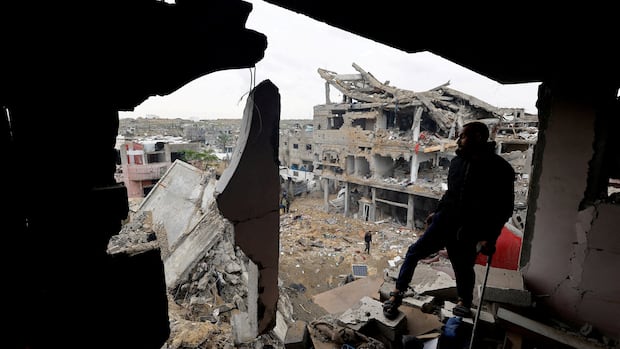
U.S. President Donald Trump’s special representative, Steve Witkoff, disclosed the formation of a technocratic Palestinian entity to help manage the conflict-ridden region in accordance with a phased U.S. strategy for the future of Gaza. In a social media post, Witkoff stated, “Today, we are initiating Phase Two of the President’s 20-Point Plan to Resolve the Gaza Conflict, transitioning from ceasefire to demilitarization, technocratic governance, and reconstruction.”
The procedure for disarming Hamas, which has reorganized since a tentative ceasefire was initiated in October, remains uncertain under the plan. Both Israel and Hamas agreed to Trump’s plan in October, stipulating that the technocratic body would be supervised by the international “Board of Peace” to oversee Gaza during a transitional phase.
The newly formed 15-member Palestinian committee, established on Wednesday, will be led by Ali Shaath, a former deputy minister in the Western-supported Palestinian Authority responsible for developing industrial zones, as per a statement from mediators Egypt, Qatar, and Turkey. The committee includes individuals from the private sector and non-governmental organizations, selected by Nickolay Mladenov, a former United Nations Middle East envoy representing the Board of Peace on the ground.
Witkoff did not disclose the number or names of committee members. Another announcement regarding the Board of Peace is anticipated at the upcoming Davos conference in Switzerland, according to a European diplomat.
In addition to creating the Palestinian body, known as the National Committee for the Administration of Gaza (NCAG), Witkoff emphasized the commencement of the second phase of Trump’s plan, focusing on full demilitarization and reconstruction of Gaza, particularly the disarmament of unauthorized personnel. He emphasized that Hamas must comply with its commitments, including the prompt return of the final deceased hostage, warning of severe repercussions for non-compliance.
While Hamas has not yet agreed to relinquish its weapons, they have agreed to transfer governance to a technocratic committee. Hamas has emphasized that broader issues regarding the future of Gaza and Palestinian rights should be addressed within an inclusive Palestinian national framework.
In the West Bank, the Palestinian Authority welcomed Trump’s efforts to advance the Gaza phased plan, expressing support for the committee and advocating for the integration of Gaza institutions with those in the West Bank, promoting a unified system, law, and legitimate defense.
Despite challenges such as Israeli airstrikes causing casualties, Hamas’s reluctance to disarm, and delays in border crossings, Trump is determined to move forward with the second phase of the plan. The ceasefire initiated under Trump’s strategy in October led to casualties in Gaza, with over 440 individuals, including at least 100 children, reported killed by Israeli actions, as per UNICEF.
Hamas leaders and other factions are meeting in Cairo to discuss the second phase, with a focus on disarmament. Israeli withdrawals within Gaza are contingent on disarmament, a condition Hamas links to the establishment of a Palestinian state. Both Hamas and Fatah have endorsed the committee members’ list, including representatives from various sectors.
Reconstruction costs are estimated to exceed $50 billion, with the process expected to span several years and minimal financial commitments made to date.