
Canada’s initiative to construct a $267 million medical countermeasures laboratory in Winnipeg is viewed as a crucial move in preparing for future pandemics. However, experts caution that the facility will encounter significant challenges related to sustainable funding, staffing, and governance. The federal government recently awarded a $10.2 million design contract for the facility, which is scheduled to open in 2033 adjacent to Winnipeg’s National Microbiology Laboratory (NML).
While the laboratory is intended to address the critical need for testing early-stage vaccines, treatments, and diagnostic tools, health experts emphasize that simply having a new building will not suffice without substantial, enduring investments in skilled personnel. Dr. Joanne Liu, a physician and professor at McGill University, underscores the importance of having the necessary human resources to establish a world-class center dedicated to countermeasures.
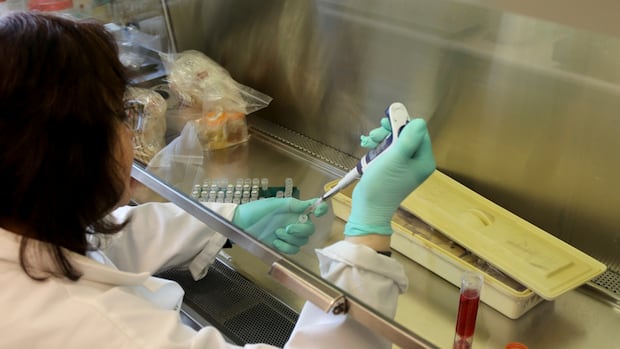
The proposed facility aims to enhance capacity for preclinical trials, including laboratory and animal testing, within Canada’s research and development framework. This specialized space would enable scientists to conduct preliminary testing on small vaccine batches before progressing to clinical trials. Currently, space limitations at the NML sometimes force the repurposing of facilities designated for high-risk pathogen research for preclinical experiments.
Experts advocate for expanding Canada’s capabilities in preclinical research, emphasizing the need for sustained funding over the long term. The project’s success hinges on the commitment to continuous financial support for advancing products and research efforts. McGill’s Dr. Liu stresses the importance of investing in pandemic research even during periods of relative calm, emphasizing the need for consistent funding throughout the research process.
Concerns are raised about the governance and operational risks associated with the new lab. Gary Kobinger, a former NML scientist, warns against potential bureaucratic hurdles and funding issues if the facility is solely government-operated. He cites past challenges faced during the development of the Ebola vaccine as a cautionary example. Efforts to establish effective governance and operational efficiency will be critical for the success of the project.
In response to criticisms, the Public Health Agency of Canada (PHAC) defends its efforts, highlighting significant federal investments in the life sciences sector since 2018. The agency emphasizes collaborative partnerships between public health officials and private industry, with the establishment of Health Emergency Readiness Canada tasked with facilitating research and development collaborations. However, experts stress the need to learn from past mistakes and ensure efficient management of patents and operational processes to maximize the laboratory’s effectiveness.