
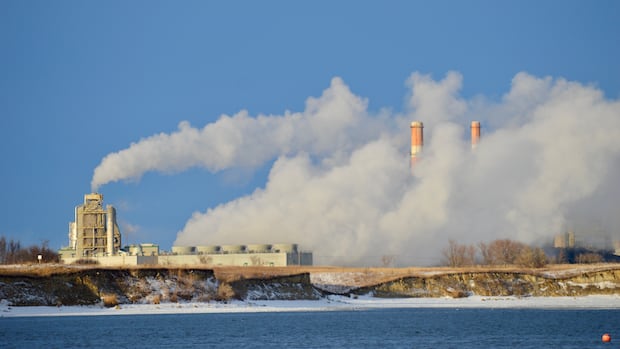
A coalition of environmental activists has had their legal bid against the Saskatchewan government’s approval to prolong the operation of three coal-fired power plants until 2050 rejected. The Saskatchewan Environmental Society, Citizens for Public Justice, and three residents had sought a judicial review of the province’s move to renovate and extend the lifespan of these coal plants beyond the federal deadline for phasing out coal-based electricity.
The environmental organizations contended that the provincial decision contradicted federal laws and international commitments. In 2016, the Canadian government set a target to eliminate coal-powered energy by 2030 to decrease Greenhouse Gas Emissions and align with its climate objectives under the Paris Agreement.
However, last year, Jeremy Harrison, the minister overseeing SaskPower, informed staff that the power utility needed to extend the operation of Saskatchewan’s coal-fired plants as they transitioned to nuclear power. Harrison emphasized the importance of ensuring reliable, affordable power generation, and energy security in the future.
The province’s resolution will keep two coal plants near Estevan, namely the Shand and Boundary Dam stations, and the Poplar River plant near Coronach running well past the federal closure deadline, although the province reiterated its commitment to achieving a net-zero grid by 2050.
Bob Halliday, vice-president of the Saskatchewan Environmental Society, expressed confusion over the province’s shift away from emphasizing renewable energy sources and inter-jurisdictional collaborations to attain climate targets, opting instead to sustain the coal plants. Halliday highlighted the significant transition required to refurbish coal-fired plants and construct nuclear facilities by the 2030s.
The Court of King’s Bench decision on January 12, which declined to review the government’s action, disappointed Halliday’s group. Justice Shawn Smith underscored that courts are not intended to manipulate government actions for policy outcomes. One of the challengers, 12-year-old environmentalist Kiké Dueck from Regina, expressed disappointment with the ruling.
Dueck emphasized that global trends favor moving away from fossil fuels, and Saskatchewan’s reliance on coal contrasts with other regions, suggesting that sticking to fossil fuels is neither economically sustainable nor justifiable.
In response to the court ruling, the province expressed satisfaction, stating that the matter primarily concerns government policy rather than judicial intervention. The government asserted that extending coal-fired power is vital for ensuring a dependable and cost-effective energy future for Saskatchewan residents.
Both Dueck and Halliday are contemplating whether to appeal the court’s decision.