
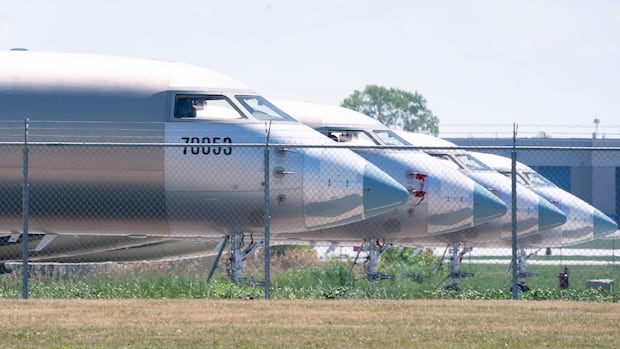
U.S. President Donald Trump has raised concerns over the business jet sector, threatening to disrupt U.S.-Canada economic relations. In a recent post on Truth Social, Trump announced the decertification of Bombardier Global Express business jets and proposed imposing 50% import tariffs on all Canadian-made aircraft until four Gulfstream models are certified by the Canadian regulator.
Transport Canada, responsible for aircraft certification in Canada, has not yet responded to requests for comment. Trump’s actions have been met with criticism, with the IAM union warning of potential job losses and industry disruptions on both sides of the border.
The aviation industry, particularly the business jet market with planes costing up to $80 million, could be significantly impacted by Trump’s threats. The certification process, governed by global aviation rules, involves primary certification by the country of design, followed by validation from other countries.
Despite the uncertainty surrounding Trump’s ability to decertify aircraft, industry players have expressed concerns about the potential consequences. Mixing economic issues with safety regulations could have far-reaching implications for the aviation sector, according to industry experts.
Bombardier, a Montreal-based company, responded to Trump’s statements, emphasizing its compliance with FAA standards and the importance of resolving the situation swiftly to avoid disruptions to air traffic. Meanwhile, Gulfstream models remain uncertified by Transport Canada, highlighting ongoing challenges in the certification process.
Trump’s aggressive stance towards Canadian-built aircraft has raised questions about the future of trade relations in the aviation industry. The implications of imposing tariffs and decertifying aircraft extend beyond economic considerations, affecting the stability of the aviation system as a whole.