
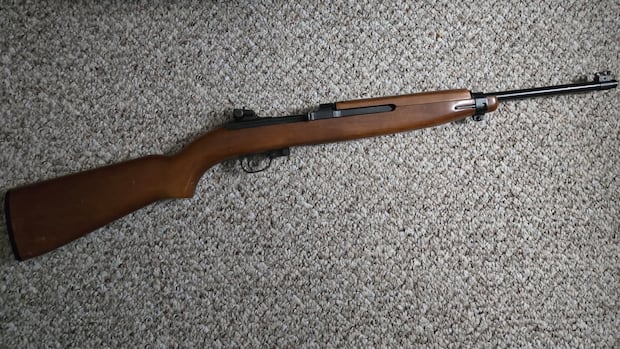
Kelly Pierce, a resident of Yellowknife, enjoys using her Plainfield Machine M1 Carbine firearm for recreational target shooting at the range. However, this specific firearm is among those banned in Canada and subject to the federal gun buyback initiative. The government has set a deadline of October 30 for owners like Pierce to safely dispose of or permanently deactivate their assault-style firearms to avoid potential criminal consequences for possessing prohibited weapons.
In the Northwest Territories (N.W.T.), the administration of the federal buyback program presents challenges as the territorial government has stated it will not oversee it. Consequently, individuals such as Pierce face uncertainty about the necessary steps to take. The N.W.T. government has clarified that the RCMP in the territory will not be involved in the program, emphasizing their focus on core policing duties for community safety.
Due to logistical obstacles in the N.W.T., including a lack of local service providers, firearm owners in the region are being allowed to utilize mailed return kits provided by Public Safety Canada. Although alternative collection options tailored to northern communities are mentioned, specific details are not yet available, leaving individuals like Pierce in limbo about the return process.
Jonathan Rocheleau, the president of the Yellowknife Shooting Club, highlighted the existing challenges of returning firearms in the N.W.T., independent of the federal buyback program. He recounted difficulties in attempting to return firearms to the RCMP, citing their unavailability. Rocheleau stressed the importance of facilitating the disposal of firearms to prevent potential dangers if they are not properly deactivated.
During the Dene National Assembly of First Nations, Dettah Chief Ernest Betsina criticized the federal program for imposing additional restrictions on community members. The N.W.T. government echoed the need for transparent communication between the federal government and Indigenous governments in the territory regarding the buyback program.
CBC News contacted various stakeholders for insights, but responses were not received by the time of publication. The federal buyback program aims to remove assault-style firearms designed for maximum damage from communities, with a focus on public safety rather than restricting hunting or sport shooting activities.