
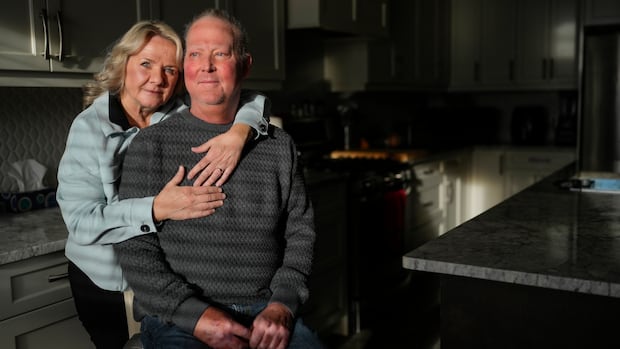
Steve Blake felt fortunate when he moved into his newly constructed house in 1995. The sturdy construction and absence of leaks made it a comfortable space for him to work from his home office in the basement daily after sending his kids off to school. For over 25 years, he spent about six hours each weekday downstairs, unaware of the potential danger.
In 2023, at 55 years old, he was diagnosed with inoperable Stage 4 lung cancer, shocking him and his wife, Kelly. Despite being a non-smoker and living a healthy lifestyle, the couple discovered that radon exposure could be the culprit. Radon, a silent and hazardous gas that can accumulate indoors, was found to have high levels in Blake’s basement upon installing a radon monitor.
Although there’s no definitive test linking his cancer to radon exposure, Blake pondered on the years of breathing in potentially harmful gases. To address this issue, a group of scientists in Canada is exploring innovative methods, such as analyzing toenail clippings, to detect long-term radon exposure and influence cancer screening protocols.
Radon, a naturally occurring gas released from soil and rock, poses a health risk when trapped indoors and inhaled over time, leading to radiation exposure that damages lung cells. It is estimated to cause around 3,200 deaths annually in Canada, highlighting the importance of awareness and mitigation efforts to prevent health risks associated with radon exposure.
The Evict Radon team, led by biochemist Aaron Goodarzi, aims to collect 10,000 toenail samples nationwide to validate findings showing measurable lead in nail clippings from long-term radon exposure. By developing a noninvasive test to determine radon exposure, the team hopes to enhance lung cancer screening criteria beyond smoking-related assessments.
Despite the increasing risks posed by radon in Canadian homes, public awareness remains low, with over 40% of households unaware of the issue. Modern building techniques that create airtight homes contribute to radon buildup, emphasizing the need for proactive measures to mitigate exposure and prevent potential health consequences.
While advancements in lung cancer treatments offer hope, limited screening programs across provinces underscore the urgency to incorporate radon exposure in screening criteria to detect cases early and improve outcomes for at-risk individuals. The Blakes, like many others, recognize the importance of investing in mitigation systems to safeguard against the dangers of radon exposure, emphasizing the value of early detection and prevention efforts.