
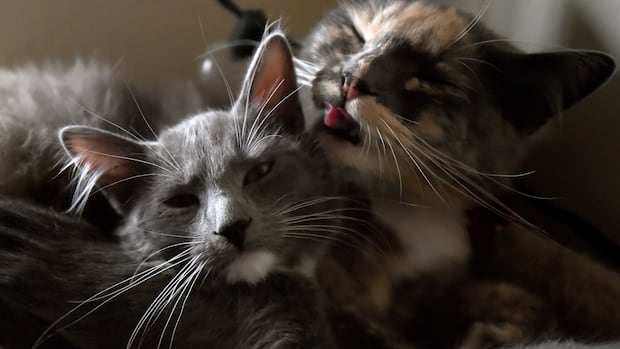
A recent study from Ghent University in Belgium delves into the intricate world of cat behavior, specifically focusing on allogrooming, which is mutual grooming among cats. Lead researcher Morgane Van Belle explained that allogrooming can sometimes serve as a passive-aggressive communication tool for cats, indicating messages like “I don’t like you here” or “I want your blanket.”
The research, inspired by Van Belle’s own cats, observed instances where grooming between cats turned from seemingly affectionate to competitive. Through video analysis of 53 households with multiple cats in Europe, the study found that allogrooming can vary between positive social bonding and confrontational interactions, similar to what Van Belle witnessed in her cats.
Distinguishing between friendly grooming and passive-aggressive behavior can be identified by the location of the grooming, body postures of the cats, and reactions of the cat being groomed. This information is valuable for cat owners in understanding and managing inter-cat relationships to enhance overall cat well-being.
Allogrooming, a common behavior observed in cats, is not unique to them and can be found in other species like primates and horses, serving various social functions. Van Belle highlighted that while aggressive allogrooming may seem counterintuitive, it actually functions as a non-violent conflict resolution strategy among cats, preventing more serious physical altercations.
Overall, the study sheds light on the complexity of cat behavior and provides insights for cat owners to navigate and improve relationships among their feline companions.