
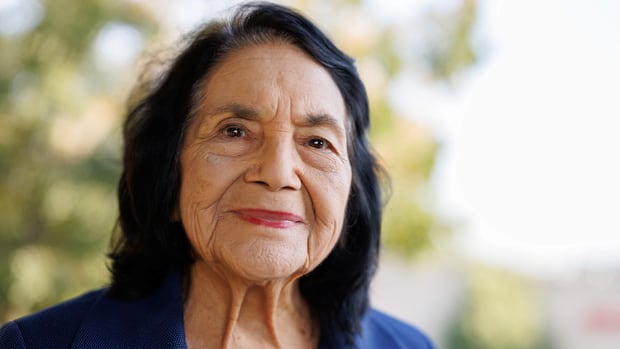
Civil rights activist Dolores Huerta, who was a co-founder of the United Farm Workers (UFW) union alongside Cesar Chavez, disclosed on Wednesday that Chavez sexually assaulted her in the 1960s. Huerta came forward following a recent New York Times investigation that revealed multiple allegations of sexual misconduct against Chavez, who passed away in 1993. The investigation included accounts from women who claimed they were victims of molestation and rape by Chavez when they were minors.
In a statement shared on social media, Huerta, now 96 years old, explained that she had kept silent about the assault for years to focus on advancing the farm worker rights movement. She expressed her condemnation of Chavez’s actions, emphasizing that the farm worker movement transcends any individual’s behavior.
The Chavez family responded to the allegations by acknowledging the distress caused by the revelations and expressing support for the survivors who came forward. The family, represented by the National Chavez Center, highlighted Cesar Chavez’s contributions and indicated that they have their own memories of him.
The UFW has canceled events honoring Chavez in response to the allegations, and some cities have scrapped or rebranded activities dedicated to the labor leader. Various Latino organizations swiftly denounced Chavez, advocating for the renaming of streets and holidays bearing his name to honor the farm workers’ struggle instead.
Governor Gavin Newsom of California reacted to the news by emphasizing that the farmworker movement extends beyond any single individual. He stated that the movement is about labor rights, social justice, economic justice, and racial justice, underscoring its collective significance.
Huerta disclosed that she had two sexual encounters with Chavez in the 1960s, detailing instances of feeling pressured and forced into sexual acts. She revealed that both encounters resulted in pregnancies that she kept secret by arranging for the children to be raised by other families. The Cesar Chavez Foundation announced plans to establish confidential avenues for individuals who may have been harmed by Chavez to come forward and seek support.
In conclusion, the impact of these allegations has sparked a wave of reactions and calls for reflection within the community, underscoring the complexities of addressing historical figures’ misconduct.