
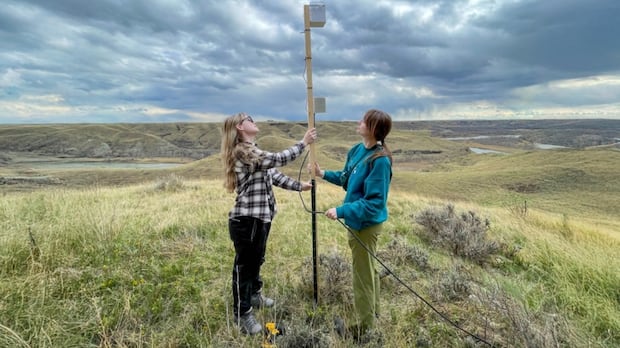
A groundbreaking research project led by two graduate students at the University of Windsor is actively monitoring the nocturnal migration of birds across Canada. Natalie Emerick and Madison Bygrove have deployed 100 acoustic recorders spanning from Vancouver Island to Newfoundland to capture and analyze bird sounds in real-time.
Utilizing advanced AI technology called Motus Audio, the collected sounds are processed and categorized, providing valuable insights into bird species’ movements during nighttime. The innovative 3D-printed recorders are strategically placed in various locations, including open fields and residential areas, to capture the communication calls and flight sounds of birds as they navigate through darkness.
This initiative marks the first extensive study of nocturnal bird migration in eastern Canada. By engaging with local communities and migration monitoring networks, the researchers have established a network of collaborators hosting the recorders, ranging from ornithologists to everyday citizens interested in contributing to the study.
One key focus of the project is assessing the impact of artificial night light on bird behavior, with observations indicating potential disorientation caused by high-intensity lighting. By analyzing the data collected throughout the fall migration season, Emerick and Bygrove aim to refine their algorithms for accurate species identification.
The development of Motus Audio was funded by the federal government and a team of scientists a decade ago, leading to the creation of an expansive “audio curtain” across Canada. Ecologist Ryan Norris from the University of Guelph emphasizes the significance of this research in monitoring bird populations in remote areas like the Canadian boreal forest, where traditional tracking methods are challenging.
Despite the complexities of identifying specific bird species through sound recordings, the AI model has shown promising results in distinguishing various calls. Norris is optimistic about the potential of this project to enhance our understanding of bird migration patterns and contribute to conservation efforts by uncovering the factors influencing bird declines.
Through this comprehensive study of nocturnal bird migration, researchers are paving the way for a deeper comprehension of avian movements and behaviors, ultimately aiding in the preservation of bird populations across Canada.