
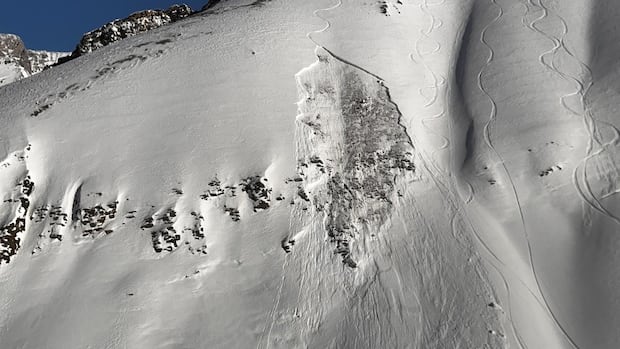
A skier exploring the backcountry faced a serious situation when they triggered an avalanche near Lake Louise. Despite being buried waist-deep in snow and swept down the slope, fortunately, the skier escaped unharmed. The incident took place on the “Vortex” backcountry run outside the Lake Louise Ski Area boundary in Banff National Park. Parks Canada shared a video of the incident to alert other mountain enthusiasts.
The avalanche, classified as a size 2 event, occurred at an elevation of approximately 2,450 metres. According to Avalanche Canada, a size 2 avalanche has the potential to bury, injure, or even kill a person. This particular avalanche was identified as a “deep persistent slab,” characterized by a heavy layer of snow resting on a weak layer near the ground, which can lead to larger and more destructive avalanches when the weak layer collapses.
Barry Blanchard, a guide at the Yamnuska Mountain School, noted the extensive snow movement in the video, leaving exposed rock in its path. He emphasized the luck of the skier in avoiding traumatic injuries, considering the presence of rocks during the avalanche. Fortunately, the snow only reached the skier’s waist level, preventing more serious consequences.
Parks Canada commended the skiers involved for their experience, proper equipment, and safe practices during the incident. However, Avalanche Canada forecaster Tyson Rettie highlighted the challenges of forecasting and detecting deep persistent slabs, as they may not exhibit warning signs before an avalanche occurs. Unlike other types of avalanches where signs like cracking or hollow noises can be perceived, persistent slabs present uncertainties.
Rettie stressed the importance of being prepared in avalanche terrain, including carrying essential rescue gear and checking daily avalanche forecasts before venturing out. While the current avalanche danger is moderate in certain areas, the risk of triggering deep slab avalanches remains a concern. Skiers are advised to stay cautious, especially in areas with rapid snow depth variations, such as near rocky sections or thin snow patches.
As the ski season progresses, vigilance and preparedness are crucial for backcountry enthusiasts to mitigate avalanche risks and ensure their safety.