
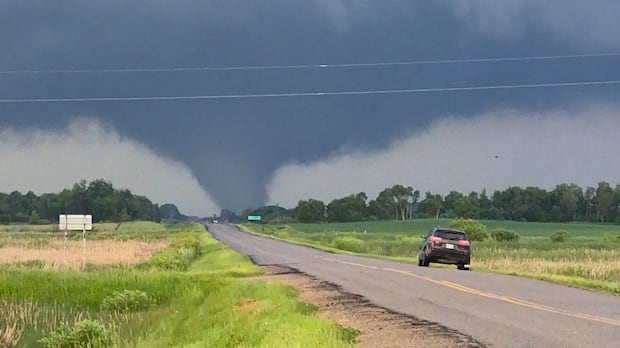
Federal budget cuts to a weather radar research team could hamper the ability of meteorologists to detect oncoming tornadoes, as evidenced by a recent tornado striking a Winnipeg neighborhood without any prior warning, according to an atmospheric science professor at the University of Manitoba. Despite a $180 million investment a decade ago to install 33 new high-quality weather radar systems nationwide, the main challenge lies in outdated software and algorithms used by forecasters to interpret radar data, rather than the functionality of the new radar systems.
The dissolution of the specialized research team responsible for enhancing radar technology implies that essential software and algorithm updates may not be implemented, as noted by John Hanesiak from the University of Manitoba. A group of nine weather experts, including Hanesiak, penned a letter to Environment and Climate Change Minister Julie Dabrusin in April expressing their apprehensions regarding the discontinuation of the weather radar research group under Environment and Climate Change Canada.
The weather radar network’s optimum utilization is crucial for minimizing casualties, injuries, and property destruction, Hanesiak emphasized. In response, Dabrusin mentioned in a communication dated May 29 that the government’s cost-cutting measures aimed at reinforcing scientific delivery had identified efficiencies while assuring the continuity of scientific support necessary for maintaining the existing radar network.
While severe thunderstorm warnings were issued for the system that affected the Whyte Ridge area in Winnipeg, leading to the tornado, the absence of a specific tornado alert raised concerns among residents and officials. The official weather alert system, Alert Ready, managed by Environment and Climate Change Canada, has the authority to issue alerts for life-threatening events within the country.
The inability to predict the specific tornado that struck Whyte Ridge was attributed to the limited predictive capacity of meteorologists caused by obsolete software and algorithms. Enhancements in software and algorithms are essential for effectively interpreting data from the new weather radar installations across Canada, Hanesiak stressed. Despite the exceptional forecasting skills of Winnipeg’s meteorologists, the outdated technology restricts their effectiveness in utilizing the full potential of the new radar systems.