
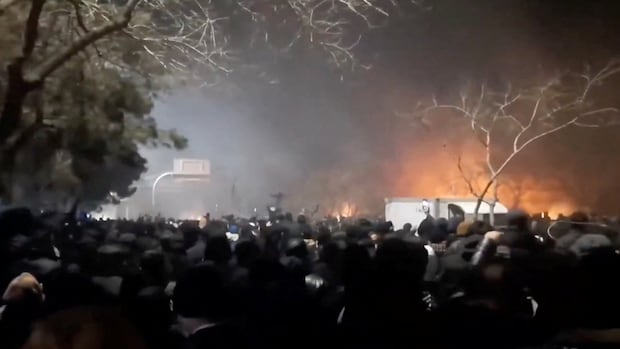
A recent crackdown on widespread protests in Iran has resulted in the deaths of at least 538 individuals, with more feared to have perished, activists revealed on Sunday. The U.S.-based Human Rights Activists News Agency reported that over 10,600 individuals have been arrested during the two-week protest period. Of the fatalities, 490 were protesters and 48 were security personnel, with the death toll expected to rise.
The Iranian government has not disclosed official casualty figures for the demonstrations. Due to the blockage of internet and international phone communication in Iran, independent assessment of the situation has been challenging. Concerns have been raised about a potential violent suppression of protests by hardliners within Iran’s security forces despite warnings from U.S. President Donald Trump regarding intervention to protect peaceful demonstrators.
President Trump has expressed solidarity with the protesters, emphasizing the pursuit of freedom in Iran. Discussions within the White House have explored various responses to Iran, including cyberattacks and military strikes by the U.S. or Israel. The U.S. military’s presence in the Caribbean has added complexity to decision-making processes.
During a parliamentary address, Mohammad Baagher Qalibaf, a prominent hardliner in Iran, issued threats against the U.S. military and Israel, suggesting they would be legitimate targets in the event of an attack on Iran. The seriousness of these threats remains uncertain, especially following previous air defense setbacks during a conflict with Israel. Any decision to engage in military action rests with Iran’s Supreme Leader Ayatollah Ali Khamenei.
The U.S. military has affirmed its capability to defend interests in the Middle East, while Israel is closely monitoring developments. Pope Leo XIV has called for dialogue and peace efforts in Iran to prevent further loss of life.
Videos circulated online, likely transmitted via satellite, depicted protests in Tehran and Mashhad. Reports indicated a heavy security presence in Tehran, prompting adaptive protest strategies to evade authorities. In Mashhad, clashes between protesters and security forces were observed. State TV in Iran accused some demonstrators of violence, likening their actions to those of terrorist groups.
President Masoud Pezeshkian acknowledged public concerns but emphasized the need to prevent societal disruption caused by violent elements within the protests. Exiled Crown Prince Reza Pahlavi urged demonstrators to continue their advocacy, despite criticisms regarding his ties to Israel. The extent of support for Pahlavi or a return to pre-revolutionary times remains unclear amidst the ongoing unrest in Iran.