
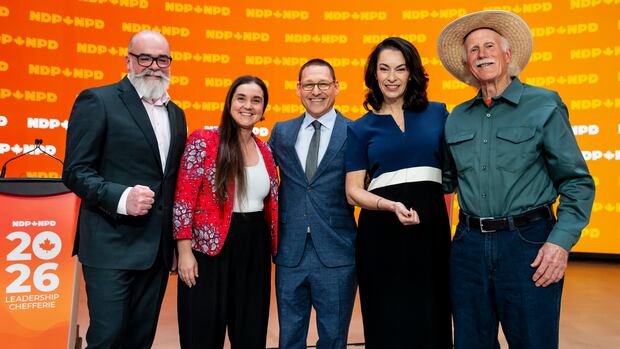
During the recent French-language NDP leadership debate in Montreal, the candidates struggled with their fluency in both official languages of Canada. When questioned about their performance in French, candidate Rob Ashton and Tanille Johnston showed limited proficiency, highlighting the importance of language skills for a national party leader. Notably, having a leader who cannot effectively communicate with French-speaking Canadians may impact the NDP’s credibility nationally.
The debate was initially planned to be in French but was later changed to bilingual. Most candidates relied on prepared French remarks before transitioning to English. Heather McPherson emphasized the significance of Quebec for the NDP, recognizing the province’s electoral importance.
Reflecting on the past success of the NDP in Quebec under Jack Layton, the candidates, predominantly from Western Canada, acknowledged the necessity to enhance their French language abilities and engage with French-speaking constituents effectively. Despite their commitments to learning French, the candidates’ proficiency varied, with moderator Karl Bélanger noting that fluency in French is crucial for the party’s growth in francophone communities and Quebec.
Former NDP staff members expressed disappointment in the candidates’ French proficiency, citing the crucial role of language in connecting with voters and rebuilding the party. While the lack of French fluency presents a challenge, there is optimism that dedicated efforts to improve language skills can resonate with voters, drawing parallels to past leaders like Mark Carney.
Looking ahead, the NDP’s upcoming debate in British Columbia will be conducted entirely in English, with the new leader set to be chosen in March. The ability to connect with diverse linguistic communities, particularly in Quebec, remains a focal point for the candidates as they strive to lead the party effectively on a national scale.