
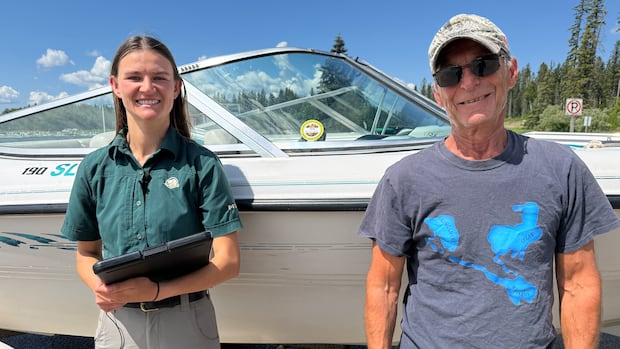
Parks Canada is seeking the assistance of the public in preventing the spread of aquatic invasive species (AIS) within Prince Albert National Park (PANP). The AIS project co-ordinator, Sarah Mitchell, emphasized the collective responsibility in halting the proliferation of these unwanted species.
To combat the incursion of invasive creatures, all watercraft entering the waters of Prince Albert National Park must possess an AIS certification permit and compliance sticker. Any boat that has been outside the province within the past 45 days must undergo inspection and decontamination by Parks Canada personnel at an inspection station, a measure that became mandatory in 2025.
The regulations are specifically designed to prevent invasive mussels like zebra and quagga mussels from infiltrating the park’s water bodies. These mussels’ larvae, known as veligers, are minuscule and invisible to the naked eye, with a single female zebra mussel capable of producing around 1 million eggs annually.
Invasive mussels present substantial economic risks to activities such as irrigation, water power generation, and municipal and industrial water usage, as highlighted by Saskatchewan’s Ministry of Environment. Recently, invasive mussel veligers were detected in the Lake of the Prairies, situated approximately 67 kilometers east of Yorkton, as announced on July 3.
At the PANP inspection station, Parks Canada staff meticulously search watercraft for organic materials such as mud, sand, and plants that could harbor AIS. Using a pressure washer with water heated to 50 to 60 degrees Celsius, the staff ensure the elimination of any aquatic invasive species that might be present.
Efforts to educate the public have significantly contributed to compliance with the AIS regulations. The certification process applies to various watercraft like canoes, kayaks, stand-up paddleboards, and more, requiring thorough cleaning of all areas where water could accumulate.
Those failing to adhere to AIS rules risk facing fines of up to $25,000 under federal AIS regulations. Parks Canada is actively collaborating with Indigenous nations, community partners, and regional stakeholders to develop a comprehensive AIS plan that will safeguard park waters while enhancing visitors’ experiences.
Increased roving AIS inspections and staff presence at boat launches have been implemented at PANP. In 2025, PANP permitted 7,000 to 9,000 watercraft and conducted 160 decontaminations of high-risk watercraft. The presence of invasive mussels in neighboring regions like Manitoba and the United States underscores the necessity of stringent measures to prevent their spread.
In addition to mussels, other invasive species such as flowering rush and Prussian carp pose threats to native species in Saskatchewan. The ongoing efforts of Parks Canada aim to mitigate these risks and preserve the ecological balance within Prince Albert National Park.