
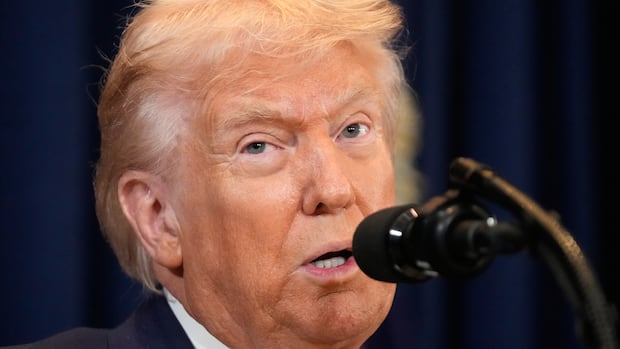
U.S. President Donald Trump and Secretary of War Pete Hegseth have offered various, sometimes conflicting, statements about the expected duration of the military campaign against Iran. Despite the strategic need to keep the enemy guessing, both officials have not shied away from providing estimates for the mission’s duration.
Since the commencement of the bombing on February 28, here are some instances of what Trump and Hegseth have indicated regarding the timeline of the conflict:
– On the first day, Trump mentioned on Truth Social that the bombing would persist “throughout the week or as long as necessary” to achieve their goal of peace in the Middle East and globally.
– The following day, Trump stated in a video update that the war would continue “until all our objectives are accomplished.”
– Trump projected a duration of four to five weeks but suggested the capability for a longer operation during a military Medal of Honor ceremony.
– Hegseth informed Pentagon reporters on the fifth day that the war could last from four to eight weeks or even longer, emphasizing the U.S.’s control over the pace and tempo.
– Trump declared on the seventh day that there would be no negotiation with Iran other than “UNCONDITIONAL SURRENDER!”
– Hegseth expressed readiness to go to any extent required for success during an interview with CBS’s 60 Minutes on the ninth day.
– When asked on the tenth day if the war would conclude that week, Trump responded with a non-specific “soon” but indicated a quick resolution.
On the eleventh day of the U.S.-Israel joint military operation against Iran, Hegseth and White House press secretary Karoline Leavitt attempted to address the conflicting statements. Both Hegseth and Leavitt emphasized that Trump holds the authority to determine the war’s objectives and its conclusion.
According to Hegseth, the President has the prerogative to decide when the military objectives have been met and when Iran has unconditionally surrendered. Leavitt echoed a similar sentiment, emphasizing that the operation’s conclusion rests with the commander-in-chief.
Despite the lack of clear signs of surrender from Iran, the appointment of Ayatollah Mojtaba Khamenei as the supreme leader suggests a firm stance by Tehran. The regime’s refusal for a ceasefire was reinforced by Mohammad Bagher Ghalibaf, the speaker of Iran’s parliament.
Thomas Juneau, a professor at the University of Ottawa, highlighted the inconsistency in Trump’s administration’s messaging on the war’s endgame. Juneau suggested that Trump’s decision to end the war would likely be influenced by domestic political pressures rather than achieving specific objectives in Iran.
The administration has focused on military objectives such as targeting Iran’s missile production, navy, nuclear program, and support for militant groups like Hezbollah and Hamas. However, clarity on the political objectives of the war, including regime change, remains ambiguous.
Colin H. Kahl emphasized the importance of defining clear political objectives for the war’s success. Kahl noted that wars without defined political goals often lead to uncertain outcomes and emphasized the need for a clear strategy to achieve a successful conclusion.