
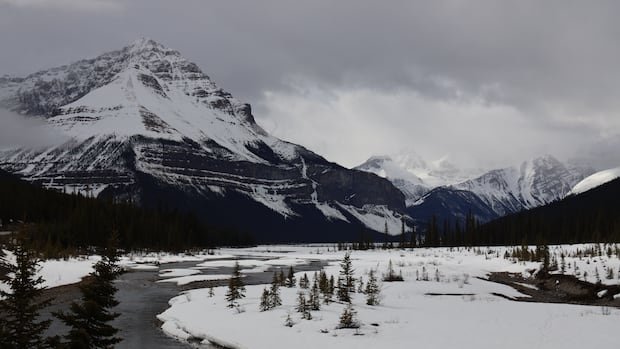
A colder and wetter winter this season in the Canadian Rockies has led to near-record snowfall, potentially benefiting the Northwest Territories by reducing drought and wildfire risks this summer. The amount of relief, however, hinges on the speed of snowmelt.
Northern regions of the Rockies, significant water sources for the Northwest Territories, have experienced higher-than-average snowfall. Nonetheless, data from the Canadian Drought Monitor indicates that parts of the Northwest Territories were in “abnormally dry” to “severe drought” conditions by the end of March, with precipitation levels below 60% of normal in many areas.
Recent wildfires in the Northwest Territories have been exacerbated by limited snow and rain, resulting in low soil moisture levels and dry vegetation fueling fires during the warmer months. Kate Hale, an assistant professor at the University of British Columbia, expressed cautious optimism about this year’s drought and wildfire outlook in the Northwest Territories due to the substantial snowpack in the upper watershed areas.
Snowpack assessments in early March revealed levels 110% to 150% above average in the headwaters of the Mackenzie River Basin, while regions like Yellowknife and Great Slave Lake recorded snowpack between 70% and 90% of normal levels. Hale emphasized that the future scenario regarding flooding, drought, and wildfires in the N.W.T. depends on the pace of snowmelt in the upcoming weeks and months.
If the snow melts at an average rate, there should be a reduction in wildfire risk this year. However, a rapid snowmelt due to hot temperatures in May could result in flooding and a challenging wildfire season. While above-average snowpack can offer some relief, it may not fully address long-term aridity issues in the region.
The prolonged presence of snow in the mountains ensures water resources are available later in the year, acting as a natural reservoir for downstream water supply during the summer. Hale likened the watershed to a system of interconnected “buckets,” with soil conditions playing a critical role in wildfire-prone areas.
John Pomeroy, a professor at the University of Saskatchewan, noted that it typically takes more than one wet year to replenish groundwater levels fully. Despite the positive impact of this year’s snowpack, it may only provide a temporary respite for areas like Great Slave Lake, which have experienced low water levels for an extended period.
Experts believe that the above-average snowpack observed this year aligns with the broader trends of climate change, with fluctuations driven by factors like the La Niña weather pattern. As temperatures rise and weather patterns shift, variations in precipitation and temperature levels are expected, impacting phenomena such as droughts and floods.
Pomeroy emphasized the increasing impact of climate change on temperature and precipitation patterns, noting a heightened intensity in droughts and wet periods. The unpredictability in weather events contributes to challenges like wildfires, crop failures, and flooding, underscoring the urgent need for proactive climate action.