
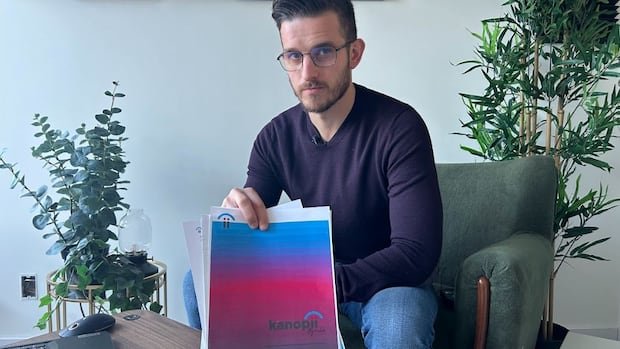
Rémi Lhomme expressed initial optimism about his prospects upon joining a Calgary travel startup in the spring of 2024. The company, Kanopii, positioned itself as a disruptive force in the online travel agency sector. However, Lhomme’s enthusiasm waned as salary payments became irregular before ceasing entirely by the end of the year. This financial uncertainty left him and his colleagues under immense stress, struggling to meet basic needs and recoup lost earnings.
Unbeknownst to Lhomme, Kanopii was not the first venture founded by its CEO, Ifeanyi Daniels-Akunekwe, to leave employees in financial limbo. The company currently owes Lhomme over $14,000, as per an Alberta government order. CBC News spoke to multiple former employees who claim to be owed substantial sums by Kanopii, with the company’s outstanding payments exceeding $152,000, as per Alberta’s public registry of delinquent employers.
Daniels-Akunekwe, while declining an interview, maintained in an email response that Kanopii never intended to deceive its employees, attributing the payment issues to unforeseen banking hurdles. He cited delayed investor funding as a primary cause for the payroll disruptions. Prior to Kanopii’s troubles, Daniels-Akunekwe’s 3volution Homes Group Inc., a homebuilding enterprise, had left homebuyers in Edmonton with unresolved mortgages for unbuilt homes.
Notably, 3volution is listed as owing over $80,000 in various financial obligations, including wages and termination pay. Despite mounting legal challenges and complaints against 3volution, Daniels-Akunekwe refrained from commenting on the matter. The succession of failed businesses linked to Daniels-Akunekwe has raised questions among former Kanopii employees regarding his ability to launch new ventures.
Calgary-based employment lawyer Sarah Coderre highlighted the legal complexities of holding individuals like Daniels-Akunekwe personally accountable for corporate failures, citing the concept of the corporate veil. This legal doctrine posits that corporations are distinct legal entities responsible for their own debts and actions, potentially shielding their owners from personal liability. While numerous civil cases have been initiated against Kanopii and 3volution, navigating the legal system for redress presents challenges.
Alberta’s Ministry of Jobs, Economy, Trade, and Immigration emphasized that employment standards legislation primarily governs employment conditions, not broader business activities. The ministry underscored employers’ legal obligations to settle outstanding dues and outlined avenues for individuals to pursue collections independently or through government intervention. Despite the complexities involved, the ministry affirmed its commitment to aiding in the recovery of unpaid wages, utilizing legislative tools like third-party payment demands.
The saga involving Kanopii and 3volution underscores the financial hardships faced by employees of these companies and the legal intricacies surrounding corporate accountability and debt recovery.