
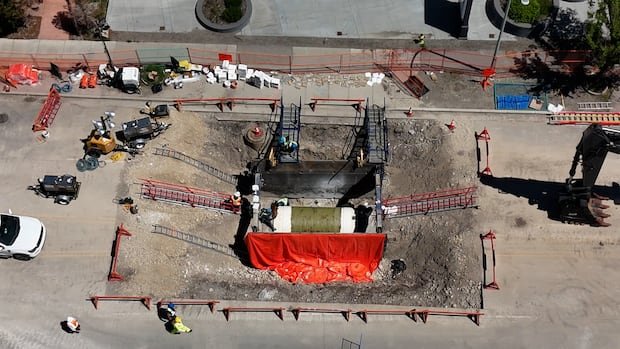
An independent panel released its findings on the 2024 rupture of the Bearspaw south feeder main, following another significant break of the same main recently. Although the latest break was outside the panel’s review scope, the report highlighted a history of missed opportunities to inspect the feeder main despite known risks of failure.
The report revealed that the Bearspaw south feeder main was flagged as vulnerable after a similar incident with the McKnight feeder main in northeast Calgary in 2004, which shared the same material, prestressed concrete cylinder pipe (PCCP). The age and design of the Bearspaw pipe, installed in the mid-1970s, were also identified as risk factors.
Despite these vulnerabilities, the panel found that three inspection recommendations over five years were either postponed or redirected due to the city prioritizing other initiatives. The report emphasized that many Canadian cities, including Calgary, are facing infrastructure deficiencies, with a significant portion of water mains requiring repairs.
The panel highlighted Calgary’s increased risk due to rapid population growth and higher maintenance costs associated with the city’s low population density. This growth-focused approach led to insufficient investments in infrastructure resilience and redundancy measures according to panel chair Siegfried Kiefer.
The panel described the city’s tolerance for infrastructure risks as too high, likening the situation to a plane crash caused by a faulty part that is not replaced across similar aircraft. While acknowledging the need for prioritization in decision-making, civil engineering professor Kerry Black emphasized the importance of addressing high-risk issues promptly.
Regarding the replacement of the feeder main, the panel warned of the looming threat of another break and supported Mayor Jeromy Farkas’s characterization of the main as a “ticking time bomb.” The report stressed the deteriorating condition of the pipe, urging immediate action and acceleration of the replacement project.
City officials confirmed that work on installing a new steel pipe to replace the concrete feeder main by 2028 is progressing. However, in response to the recent break, the panel recommended expediting the timeline to have the new pipe in place by early 2027. This accelerated project pace was acknowledged by residents as disruptive and costly but deemed necessary to enhance system reliability.
The panel did not provide a detailed cost analysis but advised prioritizing the crisis resolution over cost considerations. Farkas expressed commitment to meeting the panel’s recommendations and ensuring the timely replacement of the pipe, emphasizing a shift towards a new water utility department for enhanced accountability.
In response to the limitations of acoustic monitoring in predicting water main failures, the report suggested exploring additional inspection methods like electromagnetic assessments and robotic camera inspections. While acoustic monitoring remains a primary safeguard, the report underscored the need to diversify monitoring techniques for improved risk mitigation.