
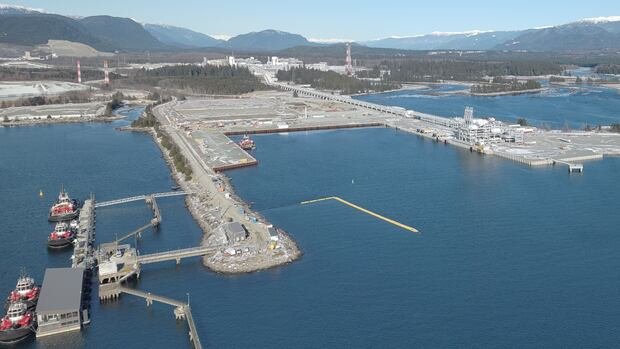
Documents obtained by air quality researcher Laura Minet from the University of Victoria reveal that LNG Canada’s gas flaring on British Columbia’s North Coast exceeded permitted levels between October and January. The reports, obtained through freedom of information requests, detail the breakdown of flaring sources into warm/wet, cold/dry, and storage and loading categories. During the four-month period covered in the filings, warm/wet flares surpassed permitted volumes by 45 times on average, cold/dry by 40 times, and storage and loading by five times.
Natural gas is transported to the Kitimat plant in British Columbia, where it is liquefied for shipment to Asian markets. An LNG Canada spokesperson noted that the facility is in its early operational phase, leading to increased flaring, but emphasized that flaring activities decrease significantly during regular operations. Flaring is described as a provincially regulated safety measure for controlled gas combustion during specific operational phases.
Despite concerns raised by environmental and health organizations regarding the potential health impacts of pollutants released through flaring, LNG Canada has reported low levels of key pollutants like nitrogen dioxide and sulfur dioxide at monitoring stations near Kitimat. The company has also engaged with the community, First Nations, and government agencies to address concerns.
LNG Canada, owned by Shell and four Asian companies, is considering doubling its capacity in a second phase, which is undergoing a rapid review by the new federal major projects office. The project’s initial phase saw its first shipments last summer, with subsequent community notifications issued for flaring events. Laura Minet’s research emphasizes the need to consider high flaring volumes in environmental impact assessments, highlighting the startup phases of LNG facilities worldwide characterized by significant flaring lasting approximately two years on average.