
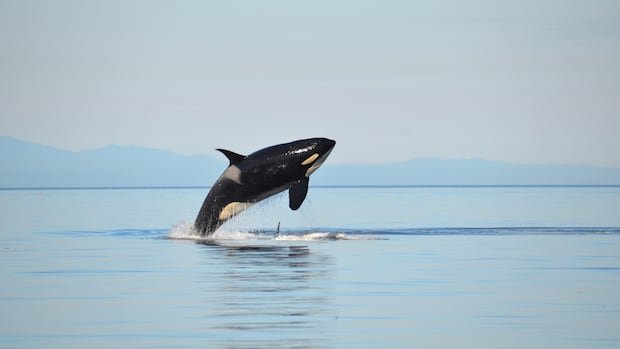
A non-profit organization in Nova Scotia has faced a setback in its attempt to relocate two killer whales from France to a coastal sanctuary designated for retired marine park whales. The Whale Sanctuary Project confirmed on Friday that the French government had opted to transfer the orcas, Wikie and her son Keijo, to Loro Parque zoo in Spain’s Tenerife Island.
This decision represents a significant blow to the group, which had announced plans over six years ago to establish a 40-hectare enclosure in Wine Harbour, N.S., comparable in size to 50 football fields, featuring floating nets surrounding the area. Experts note that captive whales and dolphins lack the essential survival skills needed for release into the wild.
Following the closure of Marineland Antibes in southern France in compliance with a 2021 French law prohibiting the captivity of whales and dolphins for entertainment, the French government approved the transfer of the orcas to Loro Parque. While the initial preference was for the whales to be relocated to the Nova Scotia sanctuary, recent statements by French officials indicated that Marineland Antibes still owned the orcas and preferred sending them to the Canary Islands instead.
Charles Vinick, CEO of the Whale Sanctuary Project, expressed disappointment over the decision, emphasizing the intent of the French law to cease the use of whales and dolphins for entertainment and breeding. The organization remains committed to constructing the sanctuary on Nova Scotia’s Eastern Shore, although the necessary 20-year Crown lease and federal permits for whale transfers are pending.
Despite the setback, the Whale Sanctuary Project is optimistic about securing funding for the completion of the sanctuary, aiming to provide long-term care for whales transitioning out of captivity. Their dedication to establishing a sanctuary that supports whales globally aligns with the evolving shift away from captive environments by governments and institutions.