
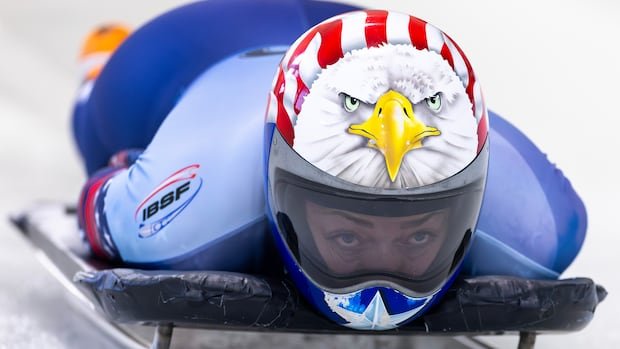
Canada’s skeleton team has refuted allegations made by American athlete Katie Uhlaender that their coach deliberately sabotaged her chances at the Olympic Games. The sport’s governing body has initiated an investigation into the matter as athletes from various countries strive for the remaining qualification points for the upcoming Milan Cortina Games, with the qualification period set to conclude on Sunday.
During a North American Cup race in Lake Placid, New York, Canada withdrew four out of six female athletes on Sunday, decreasing the available Olympic qualification points in the competition, which Uhlaender ultimately won. This decision by Canada, according to Uhlaender, significantly impacted her prospects of participating in her sixth Olympic Games, as she is currently ranked third among U.S. women and 20th globally.
Denmark’s bobsled and skeleton federation head, Carsten P. Wulf, joined Uhlaender in accusing Canada of manipulating Olympic qualifications, stating that such behavior contradicts the spirit of the Olympics and fair play. The controversy arose after a phone call between Uhlaender and Canadian head coach Joe Cecchini, where Cecchini allegedly cited protecting the Canadians’ ranking positions in the International Bobsleigh and Skeleton Federation (IBSF) as the reason for the decision.
Despite the allegations, Bobsleigh Canada Skeleton defended its actions, emphasizing that the athletes were withdrawn from the competition in the best interest of their welfare, following challenging performances in the first two races in Lake Placid. The organization clarified that the decision was not aimed at Olympic qualification manipulation but rather at prioritizing athlete well-being.
The Integrity Unit of the International Bobsleigh and Skeleton Federation will conduct an investigation into the dispute, following a formal complaint lodged by Denmark’s bobsled and skeleton federation. The controversy has highlighted the significance of World Cup results over feeder circuits in world rankings, with victories in World Cup events carrying more weight than those in lower-level competitions.
The 2026 Winter Olympic Games are scheduled to commence on February 6, with the women’s skeleton competition featuring 25 competitors. The allocation of athlete slots per country will be determined based on the rankings at the end of the qualification period. Several national skeleton federations, including the U.S., have expressed their commitment to fair play and await the IBSF’s decision regarding the ongoing dispute.