
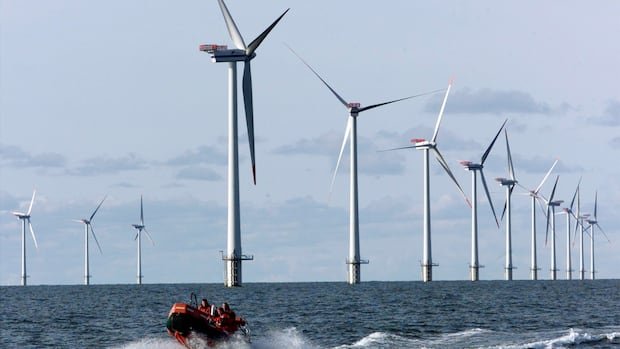
Nova Scotia is on the verge of enacting a new law that outlines how the province will generate revenue from offshore wind projects. However, some experts in the industry believe that more specific details need to be clarified before developers will be willing to invest.
Under the legislation introduced by Premier Tim Houston, offshore wind projects would be required to pay the province $7,000 per megawatt of their turbine capacity for the initial ten years of operation. Following this period, the province could potentially shift to a royalty based on gross revenue, with the proposed rate currently under consideration set at four percent.
While the offshore wind industry sees potential in Nova Scotia’s offerings and finds the general framework to be reasonable, a four percent royalty rate may deter some companies. According to Jonathan Robinson, a senior policy advisor with Marine Renewables Canada, the decision to invest will heavily depend on additional costs and crucial factors such as the completion of transmission lines and their connection points.
Developers seek predictability, but the economic landscape for offshore wind in Nova Scotia remains uncertain, with questions surrounding energy buyers, project timelines, and the availability of federal investment tax credits.
Comparing Nova Scotia’s financial approach to that of ten other countries projecting to exceed five gigawatts of offshore capacity by 2032, the Department of Energy spokesperson described the province’s strategy as modest and highlighted the low upfront costs. The newly proposed legislation, which includes a $1 million license fee, aims to strike a balance between attracting investments and providing fair value to Nova Scotians.
Industry expert Michelle Robichaud from the Atlantica Centre for Energy emphasizes that Nova Scotia’s competitiveness globally will hinge not only on the revenue framework but also on various project economics. While there is optimism for interested investors, uncertainties remain regarding power purchasers and pricing.
In addition to financial considerations, technical challenges such as supply chain development and port infrastructure need to be addressed before offshore wind projects can progress smoothly. Maria Pallard, a principal consultant with ABL, stresses the importance of methodically resolving potential bottlenecks to fully leverage Nova Scotia’s abundant offshore wind resource.