
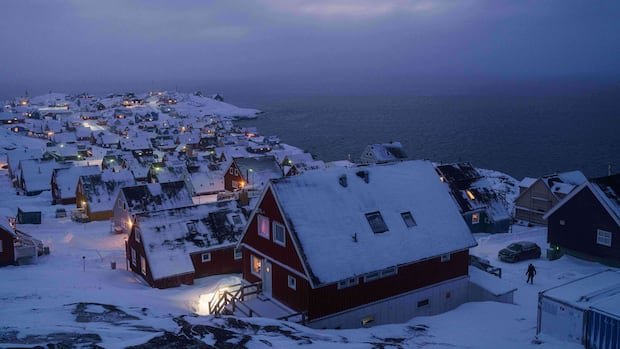
U.S. President Donald Trump asserts that Greenland is crucial for national security, sparking concerns among Greenlanders about their own security. Inuit advocacy groups and Greenlanders residing in Canada strongly oppose American ambitions on their land, denouncing being pawns in geopolitical games orchestrated by distant powers.
Sara Olsvig, chair of the Inuit Circumpolar Council and a former member of both the Greenlandic and Danish parliaments, emphasized that there is no preferable colonizer, highlighting the negative impacts of external interests on indigenous communities. Despite the desire for greater self-determination, Inuit support robust international collaborations like the Arctic Council to uphold peace and diplomacy in the region.
The majority of Greenlanders, as revealed in a recent Verian Group poll, reject the idea of becoming part of the U.S. or Denmark. Laakkuluk Williamson, a Greenlandic descendant in Iqaluit, expressed apprehension over the potential transformation of Greenland into a territory akin to American Samoa or Puerto Rico, raising concerns about the lack of autonomy and representation under U.S. control.
Aaju Peter, a lawyer with roots in Greenland, acknowledged the limited options Greenland would have in the face of U.S. aggression but emphasized the importance of respecting international law and Inuit self-governance rights. Despite Trump’s warnings of other nations vying for Greenland, officials from China, Russia, Greenland, Denmark, and the U.S. dismissed immediate threats to Greenland’s sovereignty.
Efforts are underway for diplomatic discussions, with foreign ministers from Denmark and Greenland scheduled to meet U.S. Vice President JD Vance and Secretary of State Marco Rubio in Washington. The ongoing discourse surrounding Greenland’s future has significant implications for global alliances, including NATO, and the prospects for Arctic stability.