
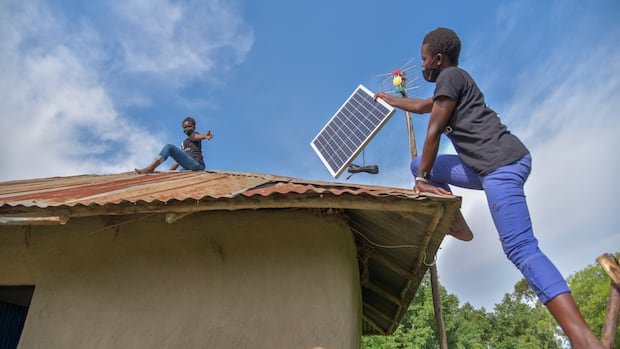
Developing renewable energy solutions in Africa demands innovation and flexibility due to the continent’s resource limitations and diverse cultural landscape, as highlighted by Canadian companies operating in the region.
Despite four in 10 Africans lacking access to electricity, the continent has seen a surge in solar adoption. Last year, Africa installed 4.5 gigawatts of new solar capacity, with a 54% increase, marking a record year of growth, according to a recent report by the Global Solar Council.
While utility-scale solar farms account for over half of the installations, privately financed rooftop systems make up 44%, mainly in off-grid areas. However, these distributed systems struggle to attract public and international investments, impacting their expansion in households and businesses.
Nevertheless, Canadian firms, among others, are pioneering innovative approaches to bring solar solutions to African communities. Toronto-based Solar Panda offers rent-to-own rooftop solar systems, providing affordable access to electricity through small deposits and daily payments as low as 50 cents.
On the other hand, Halifax-based Jaza Energy implements a unique solar-powered battery swapping model. Solar panels at “solar charging hubs” charge lithium-ion battery packs rented by customers for powering lights, TVs, and phones. Customers swap depleted batteries for new ones every few days, offering a convenient and cost-effective energy solution.
As distributed solar gains momentum alongside utility-scale projects, financing models lag behind the shift. Most clean energy finance in Africa stems from public and development sources, failing to cater to the needs of households and businesses requiring smaller, local currency loans.
Despite challenges, distributed solar plays a crucial role in expanding electricity access across Africa, creating jobs, and fostering economic growth. While concerns exist about affordability and grid connectivity, the potential for solar energy in Africa remains vast as the continent’s population is expected to reach 2.5 billion by 2050. Amidst these challenges, Africa presents a significant growth opportunity for the solar industry.