
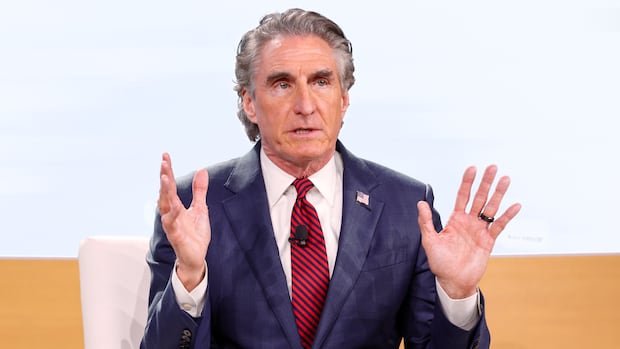
U.S. Interior Secretary Doug Burgum recently journeyed to Venezuela alongside oil and mining industry leaders to highlight the untapped potential in the country’s overlooked oil and gas reserves. At a recent energy conference in Houston, Burgum reiterated the vast opportunities in Venezuela’s energy sector, emphasizing the abundance of oil, natural gas, and precious metals.
During his address at S&P Global’s CERAWeek conference, Burgum expressed admiration for the remarkable resources present in Venezuela. U.S. Energy Secretary Chris Wright also echoed the sentiment, underscoring the alignment between the interim Venezuelan government and the U.S. administration in boosting the country’s production capacity.
Despite the optimistic outlook presented by government officials, skepticism looms among oil and gas executives regarding investing in Venezuela. The country faces numerous challenges, including safety risks, political instability, and the substantial investments needed to revamp its aging oilfields.
President Donald Trump has been urging American energy companies to invest in Venezuela’s energy sector, especially after the removal of former President Nicolás Maduro. Venezuela possesses the world’s largest crude oil reserves but has experienced a decline in production due to sanctions and ineffective policies.
Currently, Venezuela produces a fraction of the oil it did in its peak years, requiring substantial capital investments to restore production levels. Industry experts estimate that Venezuela needs around $183 billion in investments over the next two decades to achieve a production rate of three million barrels per day.
Despite these prospects, the Trump administration’s efforts have not yet translated into significant advancements in Venezuela’s energy sector, according to Luis A. Pacheco, a former Venezuela energy executive. While some companies are contemplating expanding their operations in Venezuela, others remain cautious due to uncertainties surrounding legal and regulatory frameworks.
Major energy players like Shell, ExxonMobil, and Chevron are assessing the feasibility of investing in Venezuela, emphasizing the importance of stable investment conditions and regulatory reforms. The recent revision of Venezuela’s hydrocarbon laws aims to attract foreign investments by granting more autonomy to private companies in the oil sector.
Concerns persist among investors regarding the reliability of Venezuela’s policies and the potential risks associated with investing in the country. The nation’s heavy crude production, similar to Western Canada’s oil, faces challenges in providing guarantees and policy consistency to foreign investors to compensate for past expropriations.
Amidst these developments, opposition leader María Corina Machado presented a comprehensive plan to revive Venezuela’s oil production during the CERAWeek conference. Machado advocated for privatizing the country’s oil and gas industry, offering long-term leases to foreign investors and emphasizing the regulatory role of the state in fostering a conducive investment environment.