
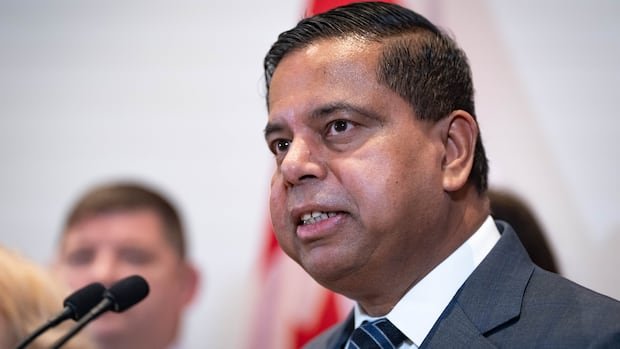
Public Safety Minister Gary Anandasangaree has expressed satisfaction with the initial trial of the government’s prominent gun control initiative despite encountering low participation rates. Since 2020, Ottawa has prohibited approximately 2,500 types of firearms, contending that the models listed are intended for combat purposes rather than for hunting or sports shooting.
The implementation of this policy has been met with opposition from the Conservatives and firearm advocacy groups, who argue that it unfairly targets law-abiding gun owners instead of addressing criminal activity. In response to these concerns, the government has pledged to repurchase these firearms to ensure fair compensation for owners.
The test phase of the buyback program had minimal engagement, with only 25 firearms surrendered by 16 individuals during a six-week trial in Cape Breton, N.S., despite Ottawa aiming to collect 200 firearms originally. The disclosed results have sparked inquiries into how the over $700-million program will be executed nationwide.
Anandasangaree asserted the success of the pilot program during a recent news briefing, emphasizing the significance of testing the registration and recovery capabilities for voluntarily surrendered firearms. He highlighted improvements made to address identified issues and expressed confidence in the upcoming full-scale launch of the program.
Concerns extend beyond low participation rates, as few provinces and law enforcement agencies have formally endorsed the program. Alberta has unveiled a detailed strategy to resist the federal initiative, labeling it as an infringement on citizens’ rights. Saskatchewan Premier Scott Moe and Ontario Premier Doug Ford have also expressed opposition to the program and its funding sources.
Critics have questioned the minister’s credibility, referencing leaked remarks where Anandasangaree appeared skeptical about the program’s efficacy and suggested personal compensation for dissatisfied gun owners. The government’s ability to navigate these challenges will be closely monitored by gun control advocacy groups, with PolySeSouvient emphasizing the importance of effective gun control measures to prevent escalating gun violence.
Quebec stands as the first province to officially support the gun buyback program, with other law enforcement agencies, including the RCMP and Quebec provincial police, committing to participation. Despite the lack of a specific target for the number of firearms to be collected during the national rollout, the government has struck a $12.4-million deal with Quebec to aid in the initiative.
The amnesty period for possessing banned firearms is set to conclude later this year, with owners required to dispose of or deactivate listed firearms by October 30 to avoid legal repercussions.