
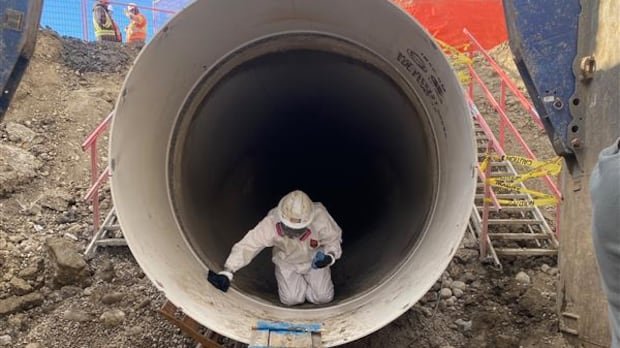
The city council has given the green light to adopt the suggestions outlined in an independent panel’s assessment of the failure of Calgary’s crucial water feeder main in 2024. Calgary Mayor Jeromy Farkas emphasized the importance of implementing the changes without any financial constraints.
During a lengthy debate on Wednesday evening, the council unanimously agreed to commence work on the recommendations. The report, made public on the same day, highlights the pressing need to address deep-rooted issues in Calgary’s water infrastructure that date back several decades.
According to the report, concerns about the pipe’s failure were initially raised in 2004 following a rupture in another feeder main in northeast Calgary. However, over the next twenty years, the city repeatedly postponed the inspection, monitoring, and risk mitigation of the feeder main.
Despite the Bearspaw feeder main being classified as a high-risk asset, limited likelihood of failure often led to resources being allocated to other areas, as per the report. The panel’s recommendations include expediting the twinning of the Bearspaw feeder main by early next year, maintaining the current pipe, and establishing a dedicated water utility department overseen by an independent board of experts.
The urgency of these recommendations was underscored in the report due to the high vulnerability of the pipe to potential catastrophic failures in the future. Mayor Farkas urged all council members to fully implement the panel’s recommendations, emphasizing the need for a comprehensive approach to address the water system issues.
The report notes that a replacement line alone will not suffice and emphasizes the necessity for redundancy to enhance the city’s water system. Farkas suggested that addressing leaks in the system and ensuring proper execution could lead to a more cost-effective water system in the long run.
The ongoing problems with the Bearspaw main, including missed inspections, are attributed to persistent governance issues across various city councils and management teams. The report emphasizes the need for a single accountable leader to prevent delays in decision-making and prioritization.
Calgary’s water system complexity is highlighted in the report, noting that the city faces challenges due to its rapid growth and extensive network of water pipes per resident compared to other major Canadian cities. The panel strongly recommends expediting the duplication of the steel pipe within a specific timeline and enhancing oversight and response to risks and asset integrity.
Furthermore, establishing a dedicated water utility department, hiring independent experts, and ensuring a stable revenue base for infrastructure maintenance are among the key recommendations. The panel anticipates that most reforms can be implemented within a year, with a full transition to a city-owned distinct corporation within three years.
In response to the report’s recommendations, the council sought further details on the delays in water system improvements and guidance on implementing the suggested changes. The urgency of the situation was emphasized by panelists, stressing the critical need for immediate action to address the issues plaguing Calgary’s water infrastructure.