
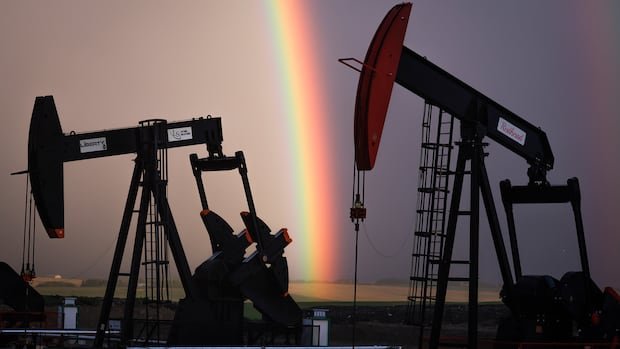
The Trump administration has taken control of Venezuelan oil tankers, calling for the restitution of oil and other assets while also threatening conflict against the Maduro regime, casting uncertainty over the fate of the world’s largest proven oil reserves.
Due to U.S. sanctions, Venezuela has been largely excluded from the global oil market, despite possessing more known oil reserves than both Canada and Saudi Arabia. The potential resumption of oil flow, similar to the pre-Chavez and Maduro era, could significantly impact Canada.
For over 25 years, Venezuelan and Canadian oil industries have been closely connected since Chavez assumed power in Caracas. Chemical engineer Lino Carrillo noted that the bitumen in Venezuela’s Orinoco Belt mirrors that in Alberta, where he has extensive experience working for Venezuela’s PDVSA and in Fort McMurray.
Venezuela holds advantages in climate and geography with its heavy crude being more easily extractable due to higher ground temperatures. The proximity of its heavy crude deposits near the Orinoco Delta and conventional oil reserves around the Maracaibo Basin to tidewater surpasses Canada’s oil sands.
Issues plaguing Venezuela’s oil sector are largely self-inflicted. The firing of 23,000 PDVSA personnel in 2003 under Chavez’s government led to a talent drain, benefiting Canada. Skilled Venezuelan engineers, including Carrillo, migrated to Canada, contributing to the oil sands boom.
Venezuelan crude, historically refined in the U.S., was gradually replaced by Canadian oil in Gulf Coast refineries as Venezuelan production declined. As Canadian oil production surged, Venezuela’s oil exports dwindled, leading to a shift in pipeline directions.
Venezuela’s oil fields suffered from political turmoil, brain drain, and mismanagement, resulting in infrastructure decay and dwindling production. The country’s oil is predominantly sold in China due to U.S. sanctions, with only a fraction reaching the U.S. under agreements like with Chevron.
The potential revival of Venezuelan crude production, if sanctions are lifted, could pose a challenge to Canadian oil in Gulf Coast refineries. However, significant investments in Venezuela’s oil sector are needed to restore production levels.
While Venezuela presents low geological risks, political instability and historical challenges make it a risky investment compared to Canada. The U.S.’s involvement in Venezuelan oil disputes adds to the uncertainty, emphasizing the importance of energy security and diversification for Canada.