
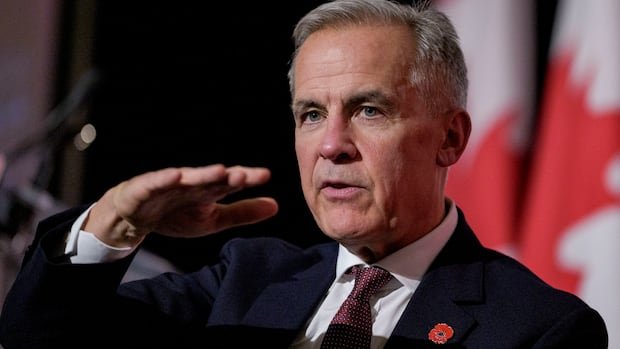
Prime Minister Mark Carney is gearing up for a trade expedition to China, a move that British Columbian authorities believe could usher in new market opportunities for local industries. The Prime Minister’s Office unveiled the trip on Wednesday, scheduled from Jan. 13 to 17. Carney is anticipated to engage in discussions with Chinese President Xi Jinping covering trade, energy, agriculture, and international security.
Adrian Dix, the provincial energy minister, expressed optimism about the potential benefits for B.C.’s energy sector from the Prime Minister’s visit to China. Dix emphasized the advantages of British Columbia’s LNG, known for being the world’s lowest emission LNG, along with the province’s mining, ports, and ongoing projects. LNG, derived from natural gas, mainly extracted from northeast B.C. and Alberta through hydraulic fracturing, is considered environmentally friendly due to its lower emissions compared to coal or oil, although some analysts contest this claim.
Dix highlighted Canada’s advantageous position, citing the robust B.C. economy and the emergence of new industries. He pointed out the four LNG projects currently in progress in B.C. Meanwhile, B.C. Jobs Minister Ravi Kahlon, embarking on a trade mission to India with Premier David Eby, lauded the efforts of Prime Minister Carney in expanding trade networks with China, the world’s second-largest economy.
Kahlon stressed the importance of nurturing economic opportunities and fostering resilient relationships amid global uncertainties. He noted that the previous trade delegation from B.C. to Asia excluded China as a destination. Kahlon emphasized the significance of federal leadership in fostering international relations, underscoring the potential of China and India as key markets for B.C.’s forestry industry amidst challenges posed by U.S. tariffs.
Regarding B.C.’s LNG competitiveness, Kahlon emphasized the importance of reliability and stability for Asian partners seeking natural gas supplies. He highlighted B.C.’s role in providing a dependable partnership for fueling the growth of Asian economies. Vina Nadjibulla, the vice-president of research and strategy at the Asia Pacific Foundation of Canada, hailed Carney’s upcoming visit as a pivotal moment in Canada-China relations, especially amid escalating tensions with the U.S. administration.
Nadjibulla anticipated discussions on new opportunities in the energy sector, including projects like the expanded Trans Mountain pipeline and LNG Canada. She also mentioned a growing interest in green energy partnerships. Expectations are high for energy-related announcements during the visit, alongside discussions on tariffs between China and Canada, involving products like canola, seafood, pork, and Chinese electric vehicles facing Canadian tariffs.