
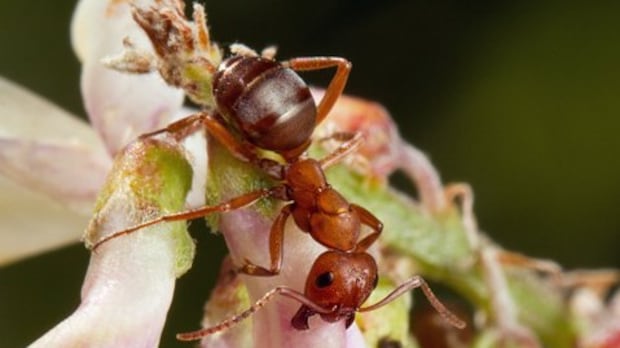
In the southeastern part of Alberta, the Cypress Hills stand out as a striking feature amidst vast prairies. Below the surface, a fascinating natural drama unfolds. Ants in Cypress Hills Provincial Park cling to plants and shrubs, unwittingly awaiting consumption by herbivores. The culprit behind this eerie behavior is the parasite Dicrocoelium dendriticum, known for its unique ability to manipulate its host like a zombie.
Researchers from the University of Calgary and University of Lethbridge highlight the exceptional control exhibited by this parasite, distinguishing it among other zombie parasites worldwide. Parasitologist and University of Lethbridge professor emeritus, Cameron Goater, notes that zombie parasites are prevalent across various host species in nature, aiming to manipulate hosts for their own benefit. These parasitic manipulations often involve driving hosts to facilitate the parasite’s transmission to the next host.
Unlike many other parasite-host relationships that end in the host’s death, Dicrocoelium has a distinct life cycle that relies on keeping the host alive. This parasite’s complex life cycle involves multiple hosts, with grazing mammals serving as the final host. Adult worms inhabit the livers of these mammals, with their eggs passing through snails before being ingested by ants.
Within the ants, the parasite manipulates behavior, compelling them to climb plants and await consumption by grazing mammals. This strategy poses risks to the ants, exposing them to predators and dehydration. Remarkably, the parasite displays an “on-off switch” mechanism, allowing it to control the ants’ behavior based on environmental conditions, such as temperature.
Researchers delve into understanding the genetic and biochemical changes induced by the parasite in the host ants to unravel the mechanisms of this manipulation. The intricate interplay between the parasite and the host’s neural and immune systems reveals the subtle yet profound alterations orchestrated by the parasite to ensure its survival and transmission.
The study sheds light on potential molecular pathways, such as adenosine regulation, involved in the parasitic manipulation. By deciphering the chemical codes behind these behaviors, scientists aim to unravel the intricate mechanisms through which parasites like Dicrocoelium exert control over their hosts.
The implications of this research extend beyond parasitology, offering insights into the consequences of human activities on natural ecosystems. The introduction of Dicrocoelium to Canada through human activities underscores the impact of human interventions on the spread and prevalence of parasites in the environment. Understanding the ecological factors contributing to the success of parasites like Dicrocoelium can inform strategies for managing emerging diseases and preserving ecosystem health.