
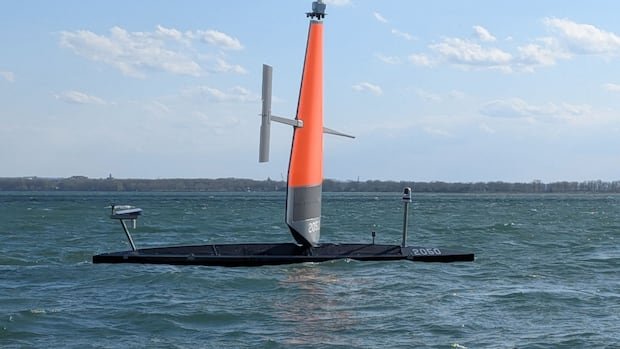
Two autonomous sail drones in bright orange hues are currently floating on Lake Erie as part of a novel program by the U.S. Coast Guard. Launched in May, these drones mark the first deployment of such technology in the Great Lakes, featuring 360-degree cameras for enhanced functionality.
The U.S. Coast Guard has highlighted the diverse roles these drones play, ranging from supporting search and rescue missions to addressing environmental spills and facilitating law enforcement operations. The cameras onboard are under constant monitoring by Coast Guard personnel, who can also manually adjust the drones as needed. Notably, the footage captured is not recorded, emphasizing the drones’ primary purpose of providing real-time situational awareness.
Lt. Junior Grade Samuel Rodriguez Garcia from the U.S. Coast Guard emphasized that the drones are not for surveillance but serve as mobile cameras to enhance on-site monitoring. These drones offer valuable insights into ongoing activities without compromising privacy.
Both U.S. and Canadian agencies, including law enforcement entities, may access this drone technology through established protocols. Lt. Garcia underscored the drones’ role in border security and the prevention of cross-border criminal activities.
While the Canadian Coast Guard is not directly involved in the U.S. sail drone program, officials emphasized the close collaboration between the two agencies. Maintaining maritime security priorities and fostering intergovernmental cooperation are key objectives for both coast guards.
Operating as part of the Great Lakes marine security initiative, which runs around the clock and involves various government law enforcement bodies, the sail drones primarily patrol within U.S. waters. Equipped with collision avoidance capabilities, the drones autonomously navigate away from vessels, although boaters are advised to maintain a safe distance of approximately 100 meters.
This seasonal initiative sees the drones withdrawn from the water when ice begins to form, ensuring their safe deployment and operation in Lake Erie.