
Hundreds of medical school graduates begin their residencies each summer, donning their white coats and embarking on further specialized training in fields like surgery or pediatrics before receiving their licenses. Residencies are reputed for their demanding learning environments, where new doctors progress by assuming increasing responsibilities under the supervision of attending physicians.
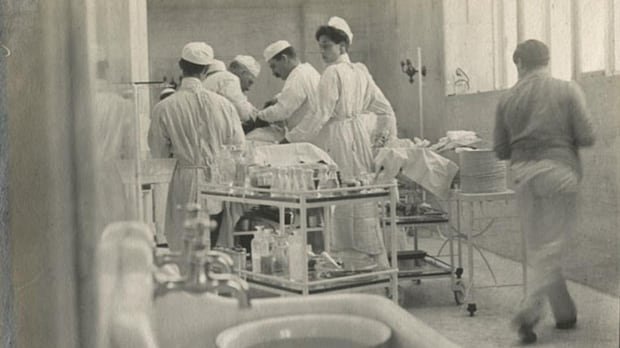
According to two researchers from the University of Calgary, the structure of residency programs can be linked back to William Stewart Halsted, a trailblazer in modern surgery known for his contributions such as perfecting mastectomy surgery and inventing surgical gloves. Halsted’s innovative residency training model, established at Johns Hopkins Hospital in the late 1800s, featured a tiered system where residents were ranked by seniority and given graded responsibilities.
The researchers suggest that Halsted may have designed this program as a means to conceal his addiction to cocaine and maintain his surgical prowess. By selecting the most skilled and intelligent individuals as senior residents, he could delegate tasks and focus on surgery while managing his personal struggles.
Halsted’s career began in New York, where he experimented with medical procedures, including cocaine as a local anesthetic, leading to his addiction. His addiction prompted a shift in his surgical approach towards a more careful and successful style focused on tissue and blood conservation.
Prior to Halsted, medical training followed an apprenticeship model, but his structured residency program, inspired by German training models, introduced a hierarchical system with intense competition for advancement. This system, coupled with Halsted’s addiction, allowed him to maintain surgical excellence while managing his personal challenges.
The enduring impact of Halsted’s residency model is evident in modern programs, where residents progressively gain autonomy and accountability. While today’s programs retain the graded responsibility concept, they are less rigid compared to Halsted’s original design, ensuring residents have the opportunity to complete their training.
Despite the evolution of residency programs, Halsted’s core principles, such as the need for continuous patient care, hospitals as learning environments, and extensive practice for skill development, remain foundational in medical education and practice.