
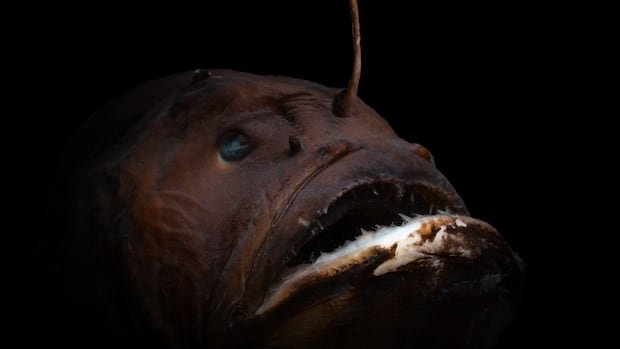
Biologist Alex Maile discusses the fascinating world of female anglerfish and their unique lures in a recent interview. These iconic creatures use their forehead appendages, known as lures, not only to attract prey but potentially to find mates in the deep sea. Maile describes anglerfish as a blend of beauty and terror, emphasizing their intriguing nature.
A new study, featured in the journal Ichthyology and Herpetology, delves into the evolution of anglerfish lures. By analyzing DNA from over 100 preserved anglerfish species, researchers suggest that different lure types may have evolved to enhance reproductive success.
Marine biologist Milton Love commends the study’s fresh perspective, challenging traditional views on anglerfish biology. The diversity among anglerfish species, each with unique lure variations, intrigued Maile, prompting him to investigate further.
Maile and colleague Matthew Davis conducted a comprehensive study mapping the evolution of anglerfish lures. They discovered that bioluminescent lures emerged around 23 to 34 million years ago, coinciding with a surge in anglerfish diversity, possibly due to the advantage of attracting mates in the dark depths.
Male anglerfish, significantly smaller than females and lacking lures, rely on sensory cues to locate potential mates. Once mature, males stop feeding and focus on finding a female for reproduction.
Notably, bioluminescence is a common mating strategy in deep-sea environments, employed by various species like lanternfish and dragonfish. These adaptations aid in attracting mates in the dark ocean depths.
Despite the male’s seemingly grim fate of fusing with the female post-mating, Love suggests that this is a natural part of the anglerfish’s reproductive cycle and fulfillment of their biological purpose.
In conclusion, the study sheds light on the intricate world of anglerfish and their unique reproductive strategies, showcasing the wonders of evolution in the deep sea.