
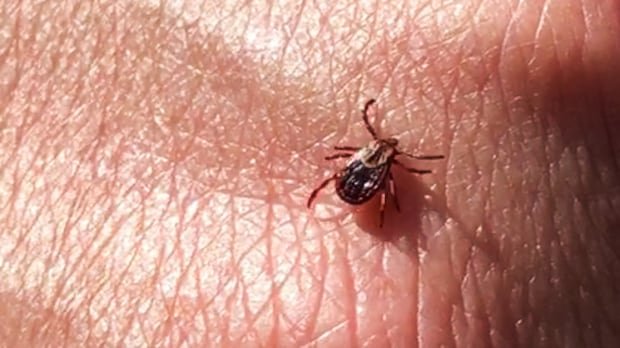
Wellington-Dufferin-Guelph Public Health has issued updated recommendations regarding tick encounters, indicating a need for tick checks in outdoor temperatures exceeding 0°C, contrary to previous assumptions of heightened risk during summer and in tall grassy areas. Phil Wong, overseeing health protection operations, highlighted a broader range of tick encounters reported through a surveillance initiative involving photo submissions and location details.
The identified key areas for tick exposure include parks, trails, camping sites with tall grass, private properties, and occupational settings for outdoor workers. Wong emphasized that individuals are increasingly encountering ticks in home environments while engaging in activities like gardening and leaf raking.
Despite concerns about ticks, Wong reassured parents that playgrounds, even those with wood chips, pose minimal risk due to the insects’ preference for damp, shaded areas over direct sunlight. He advised conducting tick checks on children after outdoor activities near wooded areas as a precautionary measure.
As the local tick population expands, Wellington-Dufferin-Guelph Public Health’s guidance aligns with experts’ warnings of a rising influx of ticks from the U.S. Health Canada has identified over 40 tick species in Canada, some native and others introduced through hosts like birds and deer. Certain ticks, such as the Western blacklegged tick, can transmit Lyme disease-causing pathogens, while the lone star tick may trigger meat allergies in humans.
To enhance tick research and disease monitoring, the Canadian Tick Research and Innovation Centre at Acadia University and the G Magnotta Lyme Disease Research Lab at the University of Guelph have been established. Justin Wood, a Lyme disease survivor and scientist at the research lab, stressed the importance of early diagnosis and intervention to mitigate the disease’s impact.
Amid concerns about tick survival during harsh winters, Wood explained that ticks typically hibernate in leaf litter, indicating minimal die-off during cold seasons. Public Health encourages online reporting of ticks for tracking purposes and emphasizes the importance of outdoor activities while advocating for regular tick checks as a preventive measure.