
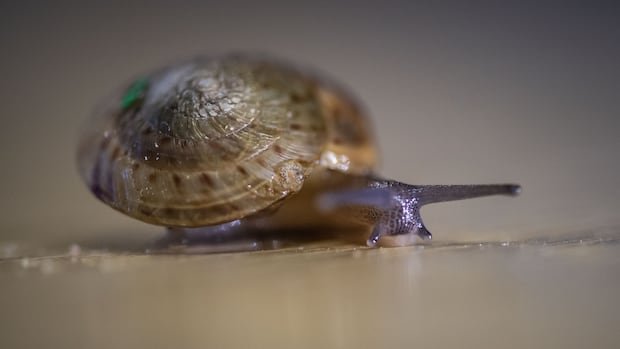
In a recent interview with invertebrate zookeeper Katie Kelton, she shared the success story of the greater Bermuda land snails. About ten years ago, these snails were found surviving in an alleyway in Hamilton, the capital city of Bermuda. They had adapted to living on concrete slabs near a dripping air conditioner. Today, thanks to the dedicated efforts of conservationists, over 10,000 of these native snails have been reintroduced into Bermuda’s protected wooded areas, with positive outcomes.
Kelton, who works at the Chester Zoo in the U.K., expressed her excitement about the thriving snail population. Through careful breeding and conservation work, the once-endangered species is now showing signs of recovery. This collaborative conservation initiative involved the Chester Zoo, Biolinx Environmental Research in Canada, and the Bermudian government. A forthcoming publication in “Oryx, The International Journal of Conservation” will document the successful conservation program.
Despite this progress, the greater Bermuda land snails still face challenges such as habitat loss and invasive predators. These threats had pushed them to the brink of extinction. Recognized for their crucial role in Bermuda’s ecosystem, these small snails act as decomposers, aiding in nutrient recycling, and provide a calcium source for native birds and reptiles.
The International Union for Conservation of Nature (IUCN) classifies the greater Bermuda land snails as critically endangered. Efforts to reintroduce them to their natural habitat were celebrated during the recent Reverse The Red Day by the IUCN. The successful reintegration of these snails into Bermuda’s woodlands is an ongoing project that demands continuous vigilance to ensure their long-term survival.
Katie Kelton, along with her team, faced various challenges in understanding and breeding these snails in captivity. Their dedication and passion for invertebrate conservation have been key to the project’s success. While the re-introduction of these snails to the wild has shown positive results in some locations, ongoing monitoring and protection efforts are crucial to secure their future in Bermuda’s ecosystem.
Timothy Pearce, a curator of mollusks, emphasized the importance of such research in developing effective conservation protocols. While the progress is promising, ensuring the continued safety of the reintroduced snails remains a priority. Some re-wilded snails have thrived in protected areas, contributing to the restoration of local ecosystems. However, maintaining a balance with invasive species and preserving their habitats will be essential for the survival of these unique creatures.