
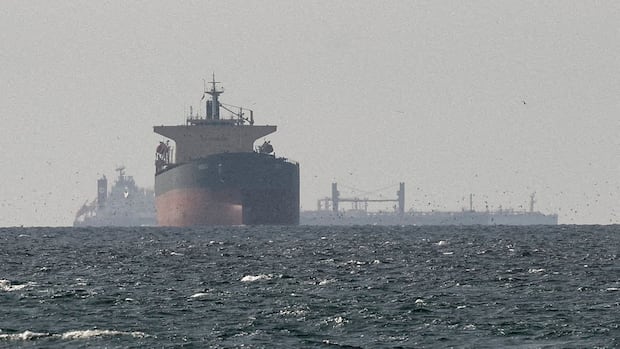
The tension surrounding the Strait of Hormuz heightened once more on Saturday as Iran reverted its decision to reopen the vital water passage and targeted vessels trying to traverse it in response to the U.S. maintaining its blockade of Iranian ports.
Fresh assaults on the strait, which typically sees about one-fifth of the world’s oil traffic, posed a risk of aggravating the global energy crisis and escalating conflicts as the Middle East entered its eighth week of war.
A fragile ceasefire is set to expire by Wednesday. Iran reported receiving new proposals from the U.S., with Pakistani mediators facilitating additional direct talks.
Iran’s unified military command stated on Saturday that the strait had reverted to its previous controlled state, managed strictly by the armed forces. The warning was issued that transit through the strait would remain blocked as long as the U.S. maintained its blockade on Iranian ports.
Iran’s Revolutionary Guard vessels fired on a tanker and an unidentified projectile struck a container ship, causing damage to some containers, according to the UK Maritime Trade Operations center.
India’s Ministry of External Affairs summoned Iran’s ambassador over the “serious incident” involving the firing on two Indian-flagged merchant ships, especially following Iran’s earlier permit for several India-bound vessels.
For Iran, the closure of the strait, initiated after the U.S. and Israel commenced the war on Feb. 28 during discussions on Tehran’s nuclear program, represents a potent weapon, capable of impacting the global economy and exerting political pressure on U.S. President Donald Trump. In contrast, the blockade serves as a means for the U.S. to maintain pressure and potentially cripple Iran’s already fragile economy.
Iran’s new supreme leader, Ayatollah Mojtaba Khamenei, delivered defiant statements on Saturday, affirming the readiness of the country’s navy to defeat its adversaries. He has not been publicly seen since succeeding his father following Israel’s initial attack.
Iran had previously announced the reopening of the strait to commercial vessels after a 10-day ceasefire was declared between Israel and Lebanon, resulting in a drop in oil prices.
Meanwhile, Trump affirmed that the American blockade on Iranian ports would continue unabated until a deal is reached regarding Iran’s nuclear program.
U.S. forces have redirected 23 ships away from Iran since the blockade commenced on Monday, as confirmed by U.S. Central Command on Saturday.
Despite the apparent stability of the U.S.-Iran ceasefire, the ongoing developments regarding the strait underscore the potential for the situation to unravel swiftly.
Pakistan signaled progress towards brokering a new agreement shortly before the renewed standoff over the strait. Pakistani Foreign Affairs Minister Ishaq Dar expressed efforts to mediate between the U.S. and Iran, aiming to reconcile differences. Pakistan is slated to host a second round of negotiations in the coming week.
Iran’s Supreme National Security Council disclosed the reception of “new proposals” from the U.S., brought during a visit by Pakistan’s army chief, currently under review.
However, Iran’s deputy foreign minister, Saeed Khatibzadeh, noted that Iran was not prepared for new face-to-face talks due to the U.S.’s persistent maximalist stance.
Despite the heightened tensions in the Strait of Hormuz, Pakistani officials remain optimistic about the U.S. and Iran nearing a resolution ahead of the April 22 ceasefire deadline.