
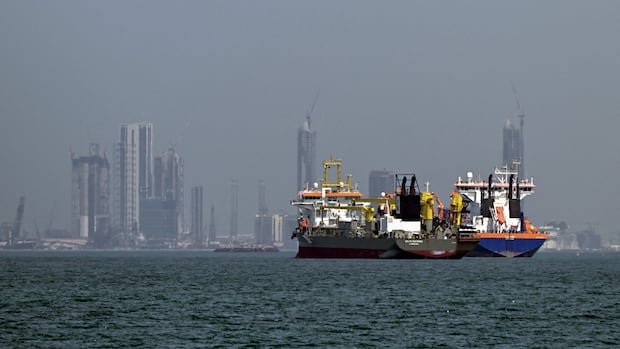
In the ongoing conflict in the Middle East near the Strait of Hormuz, merchant vessels and their crews are facing heightened risks. According to the UK Maritime Trade Operations Centre, thirteen ships have been targeted in the strait since the U.S. and Israel initiated military actions against Iran on February 28, resulting in the deaths of at least seven crew members.
Phillip Belcher, the marine director of Intertanko, an organization representing approximately 200 independent tanker owners globally, described the situation as the most perilous in the world currently. Seafarers are living in fear, witnessing missiles flying overhead and uncertain if they will be the next targets. The vulnerability of crew members on these ships is a significant concern.
Iran, which borders the Strait of Hormuz, has threatened to block oil exports during the conflict. This has led to a drastic reduction in marine traffic through the strait, disrupting global trade. The number of ships transiting the strait daily has plummeted from an estimate of 151 in February to only four on a recent Saturday, effectively halting a crucial shipping route connecting the Persian Gulf to the open sea.
In response to the heightened risks, some vessels are altering their tracking data to appear connected to China to minimize the chances of being attacked. Additionally, certain ships are turning off their automatic identification system transponders to hide their positions. However, the narrowness of the strait, combined with the presence of Iranian observers, makes it nearly impossible for ships to pass through undetected.
Hundreds of vessels, including cargo ships carrying essential goods, food, and chemicals, are stranded in the Persian Gulf, affecting around 20,000 seafarers in the region. Companies like Hapag-Lloyd are closely monitoring the situation but are hesitant to risk the safety of their unarmed civilian ship workers by attempting to navigate through the strait.
With the threat of sea mines potentially being deployed by Iran, concerns for maritime trade have escalated. The absence of confirmed evidence of mine deployment so far provides some relief, but the looming danger poses a significant long-term disruption to shipping activities.
The toll on seafarers stranded in the Persian Gulf is substantial, with workers feeling vulnerable and anxious to return home after enduring months at sea. The International Transport Workers’ Federation (ITF) highlights the risks faced by seafarers forced to cross the strait by shipowners seeking profit gains. The ITF emphasizes the importance of prioritizing the safety and well-being of these workers, many of whom come from developing countries in pursuit of a better livelihood.