
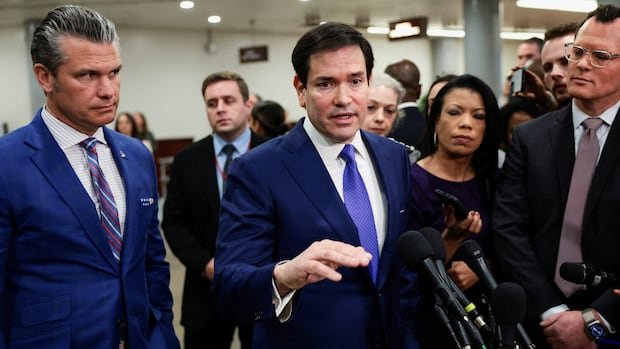
U.S. Secretary of State Marco Rubio announced plans to hold discussions with Denmark next week, following U.S. President Donald Trump’s recent interest in acquiring Greenland. Rubio emphasized a preference for diplomatic solutions over military actions when addressing potential national security threats. Denmark’s Foreign Minister Lars Lokke Rasmussen and Greenland’s Vivian Motzfeldt have requested an urgent meeting with Rubio to engage in dialogue and seek resolutions.
The possibility of a U.S. military seizure of Greenland has raised concerns within the NATO alliance and strained relations between Trump and European leaders. White House Press Secretary Karoline Leavitt confirmed ongoing discussions regarding various options concerning Greenland, including the potential use of military force at the president’s discretion.
Conversely, White House adviser Stephen Miller and certain Republican members of Congress have challenged Denmark’s sovereignty over Greenland. Republican House Speaker Mike Johnson downplayed the likelihood of military intervention, asserting that such actions were not under serious consideration within Congress.
European governments are strategizing potential responses in the event of U.S. action to claim Greenland, with French Foreign Minister Jean-Noel Barrot indicating collaborative efforts with Germany and Poland. Leaders from major European nations and Canada have expressed solidarity with Greenland, affirming the island’s sovereignty and rejecting external interference.
Trump’s persistent interest in Greenland is rooted in its strategic significance for U.S. military operations, dating back to discussions during his initial presidency in 2019. The existing 1951 agreement between the U.S. and Denmark permits the establishment of U.S. military bases in Greenland, provided proper notification is given to Danish authorities.
Despite continued assertions by Greenland and Denmark that the island is not for sale, Trump’s administration remains focused on securing control over Greenland. The island’s geostrategic location, situated between Europe and North America, has long been valued for its role in U.S. defense strategies and resource potential, aligning with efforts to reduce dependence on China.
Claims by Trump regarding Russian and Chinese naval activities near Greenland have been disputed by Danish officials, with vessel tracking data indicating no presence of foreign ships in the region. The ongoing discussions and diplomatic tensions underscore the complex geopolitical dynamics surrounding Greenland’s future.