
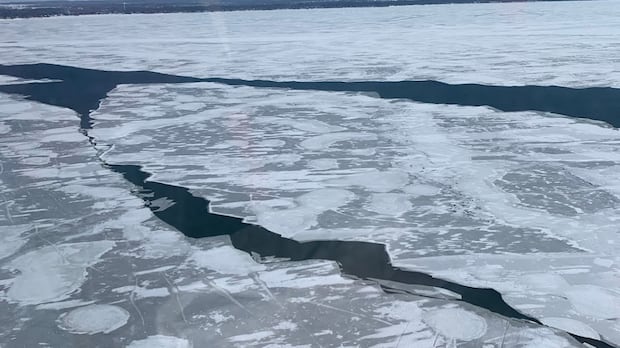
Due to the current cold weather conditions, Lake Erie has nearly frozen over. This occurrence is not unusual, as Lake Erie tends to freeze more often compared to the other Great Lakes due to its shallow depth. However, this winter has seen the most ice on the lake in the past 23 years, reaching 94% ice coverage as of late January, a month earlier than last year.
Experts state that increased ice coverage on Lake Erie can help combat erosion, reduce lake effect snow, and mitigate algal blooms. While beneficial for the environment, the shipping industry can face challenges with extensive ice formation on the lake.
Recent data from the U.S.’s National Oceanic and Atmospheric Administration (NOAA) shows that Lake Erie’s ice cover has rapidly increased to 94% as of earlier this week. Scientists, including Mike McKay from the University of Windsor, are surprised by the swift ice formation this month, with approximately 20,000 square kilometers of ice added between January 14 and January 20.
McKay emphasizes the significance of collecting samples due to the unusual early freeze-over and the rapid ice growth. He highlights that even with the ice cover, the lake remains active, especially in the western and central basins where algae blooms persist beneath the ice.
Winter measurements of the Great Lakes are crucial for understanding environmental changes and protecting ecosystems. Drew Gronewold from the University of Michigan stresses the importance of monitoring seasonal variations in large lakes, such as temperature fluctuations and ice formation.
According to George Karaganis, a senior meteorologist with Environment and Climate Change Canada, the rapid ice formation on Lake Erie this month was anticipated due to colder temperatures experienced in December and January. Karaganis notes that the extent of ice cover aligns with a La Niña year and highlights the rarity of prolonged cold spells and high ice years, attributing this trend to climate change.
Tag: rewrite-pending