
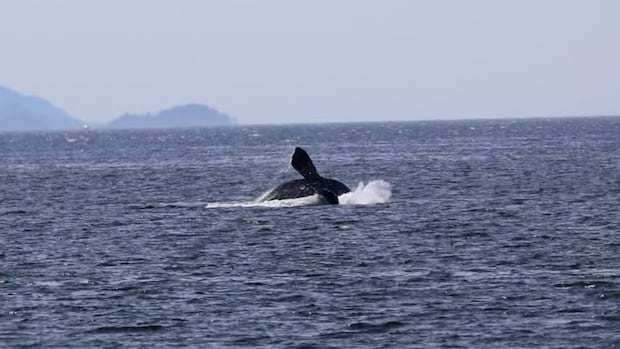
Troy Bright, a seasoned whale researcher based on Malcolm Island, had a rare encounter on Sunday when he spotted a whale species he had never seen before. The whale breached multiple times right in front of him, prompting him to quickly grab his camera to document the unusual sighting. Noticing distinct features like short, dark pectoral fins, Bright identified the whale as an endangered North Pacific right whale.
Accompanied by cetacean experts, Bright’s discovery was confirmed, highlighting the extreme rarity and endangered status of these whales. Jared Towers, a cetacean research technician from the Department of Fisheries and Oceans (DFO), joined the search effort and eventually located the juvenile right whale near Alert Bay, camouflaged with a piece of kelp.
This juvenile right whale, measuring approximately eight meters in length, signifies a significant finding as North Pacific right whales have only been spotted seven times in British Columbia. Researchers emphasized the critical status of this whale population, with fewer than 50 individuals remaining.
The recent sighting of the North Pacific right whale calf off Malcolm Island offers a glimmer of hope for the species, as sightings of calves have been scarce in recent years. Researchers are optimistic about gaining more insight into these elusive creatures and their habitats to enhance conservation efforts.
In a collaborative effort with NOAA scientists in 2024, DFO utilized sonobuoys to detect North Pacific right whales off Langara Island, furthering the understanding of their vocalizations and behavior. Despite historical challenges caused by human activities such as hunting and habitat degradation, researchers are committed to aiding the recovery of these majestic creatures through conservation measures.
The sighting of the North Pacific right whale in Canadian waters has sparked interest and support from researchers across borders, emphasizing the importance of collective efforts to protect and preserve these endangered whales. The discovery serves as a reminder of the delicate balance of marine ecosystems and the need for proactive conservation strategies to safeguard vulnerable species like the North Pacific right whale.