
Amid the recent debate surrounding a London high school’s decision to eliminate thousands of books from its library, some archivists and librarians suggest methods to preserve old and obsolete books.
Last year, H.B. Beal Secondary School in London removed over 10,000 books from its library shelves between January and March, as initially reported by the London Free Press.
Former Beal librarian Larry Farquharson, who refused to take part in the book purge and has since retired, expressed concerns about the removal of books. He emphasized the importance of individual freedom to choose reading material and criticized the unilateral decisions impacting readers’ choices.
LISTEN: Learn more about the book removal at Beal Secondary School

Around 10,000 books were eliminated from Beal Secondary School’s library last year, leading to the resignation of longtime teacher and librarian Larry Farquharson. He shared his views on the mass book removal with London Morning.
The Thames Valley District School Board (TVDSB) clarified that the library collection review at H.B. Beal was part of an inclusive libraries project, following standard practice in the province. The TVDSB stated that most books were removed due to factors like age, condition, lack of circulation, physical damage, or outdated and inappropriate content.
The TVDSB emphasized that the removal was not censorship or a ban, as books were withdrawn based on specific criteria such as availability of updated editions or more suitable resources.
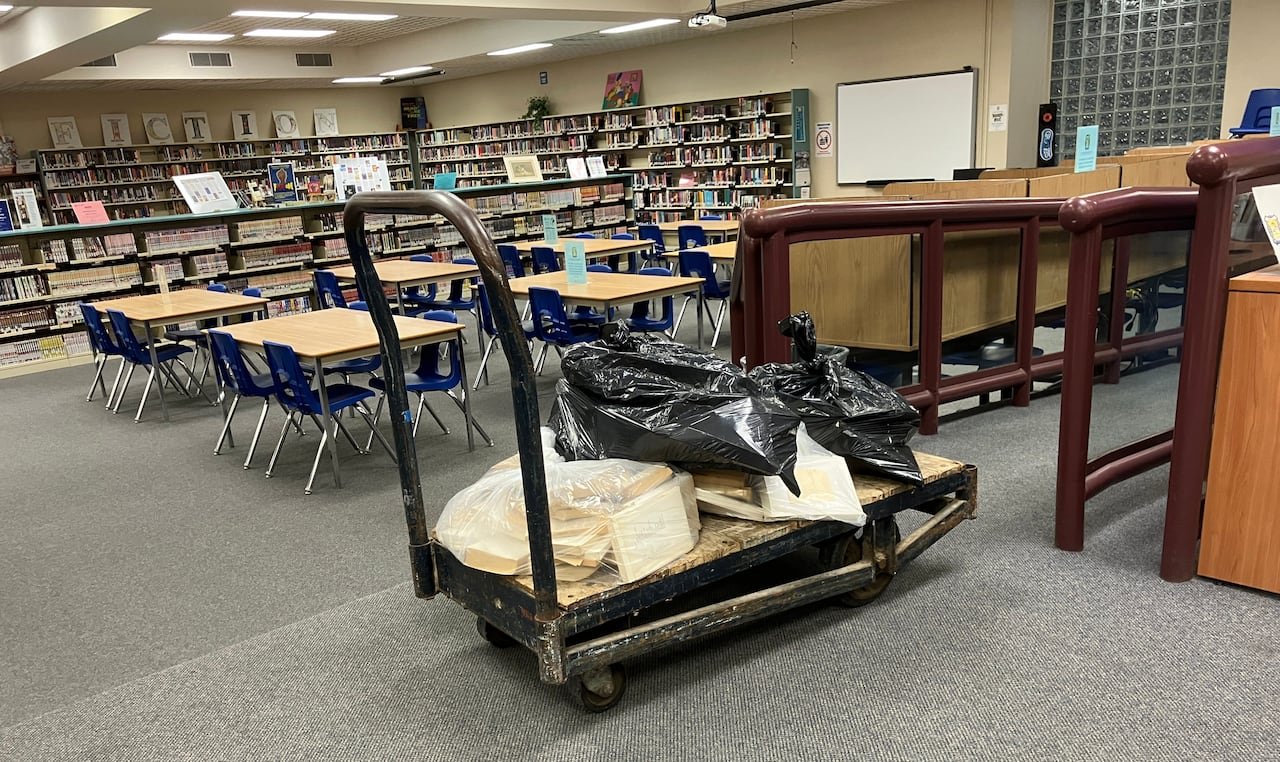
Following the public outcry over Beal’s book removal, the Ontario Ministry of Education announced a halt to further school library reviews until a comprehensive evaluation is conducted.
Education Minister Paul Calandra’s press secretary, Emma Testani, mentioned that the decision to review library collections at H.B. Beal was made before the board’s supervision change, prompting the pause on ongoing and future reviews.
In an effort to preserve old, damaged, or outdated books, librarians suggest various alternatives to recycling them. Deborah Meert-Williston, a special collections librarian at Western University, highlighted options such as donating valuable books to academic institutions or museums and regular books to charities.