
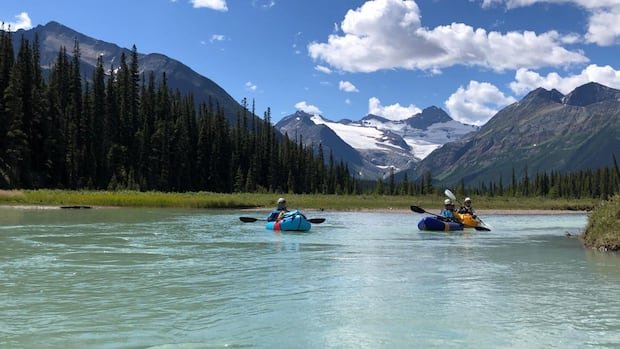
Paddlers Advocate Collaboration to Address Aquatic Invasive Species Concerns in Alberta’s Mountain National Parks
Watercraft access to numerous lakes and rivers in mountain national parks in Alberta faces closures due to concerns over aquatic invasive species (AIS), prompting paddlers to call for a more cooperative approach in managing the issue. Beginning this spring, water bodies in Jasper National Park, along with Banff, Yoho, Kootenay, and Waterton Lakes, will be divided into three zones, each with distinct regulations for water activities. While some well-known locations remain accessible to paddlers, the restrictions primarily impact backcountry areas.
Andrew Loughlin, a seasoned whitewater enthusiast based in Jasper for over two decades, expressed disappointment about the new regulations, describing them as disheartening in a letter addressed to Parks Canada. He emphasized the significance of accessing certain unique locations in the park solely by boat, highlighting that a significant portion of navigable waterways in Jasper are now restricted.
The decision follows the recent confirmation of whirling disease in Lake Louise, attributed by Parks Canada to likely human-induced activities on the lake. This disease, also detected in Banff and Yoho, leads to skeletal abnormalities in young fish species like salmon, whitefish, and trout, with the potential to devastate up to 90 percent of juvenile fish populations. While the disease was first identified in British Columbia in 2024 and later spread to the Kootenay River watershed, it has not yet been detected in Kootenay National Park.
Parks Canada emphasized the urgency to address the situation, with Dave Argument, a resource conservation manager, stressing the importance of taking immediate action to prevent further spread of the disease. Argument noted the challenges of eradicating introduced invasive species and diseases, cautioning about downstream propagation. Parks Canada highlighted that AIS are commonly disseminated through watercraft and fishing gear moved between water bodies.
While certain waterways like the main stem of the Athabasca River remain open for recreational activities, more challenging backcountry routes with Class 4 and Class 5 rapids are predominantly off-limits to watercraft, fishing waders, and windsports. Park officials identified specific rivers that will remain accessible to paddlers due to natural barriers such as waterfalls hindering AIS migration upstream.
Despite the restrictions, certain activities like swimming, snorkeling, and fishing without waders or wading boots remain permissible in restricted zones. Parks Canada underlined the importance of cleaning, draining, and drying all watercraft and equipment before entering park waters to mitigate the risk of AIS spread.
Paddlers have expressed concerns about the new policy, citing challenges in identifying closure points on Parks Canada’s provided map. Suggestions for stricter permits, gear inspections, or quarantines as alternatives to complete bans were proposed to minimize invasive species spread. While disappointed by the restrictions, paddlers noted that Jasper National Park’s limitations appear less severe compared to those in Banff.
The head of a packrafting organization raised apprehensions about the impact of restrictions on the emerging sport, emphasizing the emotional connection users establish with nature during such excursions. The organization president advocated for involving user groups in discussions with Parks Canada to shape future policies. An online survey targeting packrafters aims to gather insights for future decision-making, stressing the community’s commitment to preserving natural environments.
Encouraging compliance with the new regulations, the organization leader urged paddlers to voice their experiences and engage in conversations with Parks Canada. Emphasizing the role of user groups in safeguarding against AIS spread, the organization seeks to demonstrate its commitment to preserving the park’s ecosystems.