
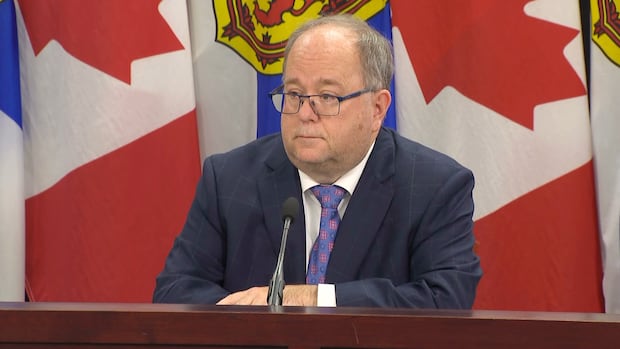
As temperatures rise in Nova Scotia, the provincial government is taking steps to assist municipalities and residents in getting ready for potential drought conditions, which a cabinet minister mentioned as an expected scenario on Friday. The Department of Municipal Affairs has put out a call for companies to bid on a one-year contract to supply emergency potable water, aiming to support municipalities with bottled water programs by offering cost-effective and dependable access to water resources. The government has clarified that it will not cover emergency bottled water costs for municipalities facing drought this year.
In addition, a newly launched water data portal enables individuals to view groundwater levels in test wells across the province, as well as access water quality data and precipitation figures. Municipal Affairs Minister John A. MacDonald emphasized the importance of proactive measures for all Nova Scotians in light of changing water conditions due to drought risks.
Last year, the province received less than 40% of its usual rainfall, leading to a severe drought in southwestern Nova Scotia, a rare event occurring once every 50 years. The most recent update from the Canadian Drought Monitor indicates ongoing dry conditions in the South Shore and parts of the Annapolis Valley.
Applications are now open for the provincial sustainable communities challenge fund, offering $6.3 million for climate-adaptation projects focusing on water resilience. Municipalities, non-profits, and Mi’kmaw communities can utilize the fund for initiatives such as community wells, backup water systems, engineering studies, and regional water infrastructure enhancements. The successful projects are expected to be announced in the fall and completed by November 30, 2027.
David Mitchell, president of the Nova Scotia Federation of Municipalities, expressed appreciation for the support provided by the province but raised concerns about the adequacy of the funding to meet all interested local governments’ needs. He emphasized the importance of provincial assistance and information amid uncertainties about the upcoming season.
One innovative project being considered is the implementation of a land-based desalination system in the Municipality of the District of Barrington, a first in Nova Scotia. This initiative, in collaboration with Quebec’s Oneka Technologies, aims to convert ocean water into drinking water for distribution through bulk water stations to address water scarcity and saltwater intrusion issues faced by residents.
While the new water data portal is a valuable resource, Barrington’s chief administrative officer, Chris Frotten, highlighted the need for further enhancements, especially in regions lacking test wells like Barrington. The province is collaborating with the Nova Scotia Federation of Municipalities to bolster community resilience through shared resources inventories.
In conclusion, the efforts to address water scarcity and prepare for drought in Nova Scotia underscore the importance of proactive planning and collaboration among various stakeholders to ensure water security for all residents.