
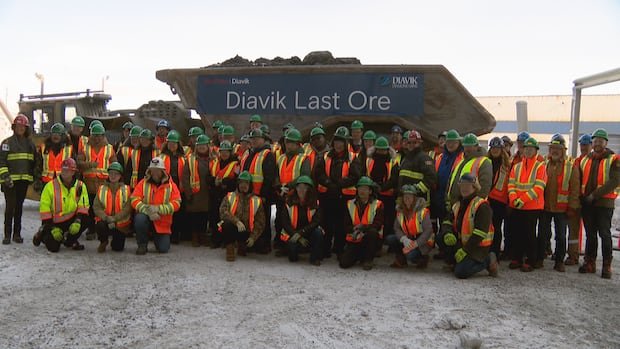
In the Northwest Territories, a well-established mine is ceasing its operations to shift its focus towards remediation efforts. The Diavik diamond mine, situated approximately 300 kilometers northeast of Yellowknife, has been in operation for many years, producing over 150 million carats of diamonds, as reported by the mine’s owner, Rio Tinto. On Tuesday, the mine permanently closed its doors.
Throughout its existence, the Diavik mine has employed hundreds of individuals, with a peak workforce exceeding 1,000 people. While not all workers hailed from the North, some have expressed a desire to remain in the territory. Sean Sinclair, who originally comes from Ontario, has been a resident of the area for over ten years. Sinclair shared that he joined Diavik while pursuing his master’s degree, eventually securing a full-time position and now serving as the closure manager at the mine. Remarkably, Sinclair’s spouse is also employed at Diavik, and the couple has no intentions to leave Yellowknife.
Echoing similar sentiments are other workers at the mine, like Mike Lowing, the principal adviser for health, safety, and environment, who has called Yellowknife home since 1974. Despite the challenges posed by the closure of the diamond mine, Lowing remains optimistic about the future of Yellowknife, emphasizing the city’s vibrancy and potential. He highlighted the upcoming projects in the region, particularly the significant investment plan announced by Prime Minister Mark Carney, which includes support for infrastructure initiatives like the Mackenzie Valley Highway project and the Taltson hydro expansion.
As the Diavik mine concludes its operations, there is a call for continued mining activities in the region. Alex Clinton, a senior adviser at Diavik with a long-standing residency in Yellowknife, envisions a resurgence in mining activities, particularly focusing on gold mining. With the rising demand for gold and ongoing projects like the reopening of the Mon Mine, located east of Yellowknife, the industry shows promise. Clinton, who sees potential in the territory’s mining sector, aims to continue contributing to its growth while providing opportunities for future generations in the field.