
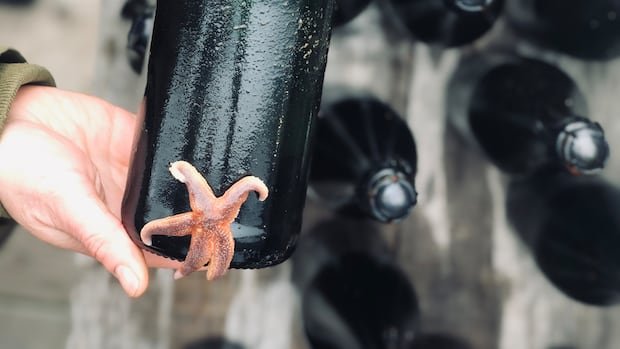
A cidery located in eastern Newfoundland has embarked on a unique method of enhancing its beverages by submerging them beneath the ocean’s surface for added flavor. In 2024, the Newfoundland Cider Company, based in George’s Brook-Milton, introduced a new line called High Tide by placing 24 bottles in the Atlantic Ocean, and they have recently repeated the process for a second year.
Founder Chris Adams described the submerged cider as a blend of ocean and orchard flavors, highlighting the fusion of land and sea elements. When retrieved from the depths, the bottles are encrusted with salt, sand, barnacles, algae, and marine life like sea stars, adding to the allure of the underwater aging process.
Adams emphasized the importance of preserving marine life during the submersion process, ensuring that creatures like starfish and small fish remain unharmed. The unique appearance of the bottles covered in algae and barnacles is intentionally retained to enrich the experience of tasting High Tide.
The decision to age the cider underwater was inspired by the use of wild apples and yeast in their cider production, with the aim of replicating the success of wineries aging wine at sea. Opening a bottle of submerged cider offers a distinct sensory experience, with the sea imparting an additional aroma to the traditional apple cider flavor.
The underwater aging process mimics the effects of cellar aging, benefiting from consistent temperatures in the ocean. However, Adams acknowledged the challenges involved in submerging the cider, describing the process of sealing bottles in milk crates and dropping them into the ocean from a boat as a somewhat unpredictable endeavor.
Jean-Benoit Deslauriers, the head winemaker at Nova Scotia’s Benjamin Bridge, a winery with experience in ocean-aging wine, mentioned that the impact of underwater aging on alcoholic beverages remains somewhat mysterious. He highlighted the benefits of consistent temperatures and protection from ultraviolet light damage, which can affect the quality of beverages aged on land.
While the first batch of submerged cider was successful, Adams shared that their recent attempt faced setbacks due to adverse weather conditions, resulting in the destruction of most bottles. Despite this setback, he remains determined to continue experimenting with underwater aging, planning to choose calmer sea areas and secure the crates with anchors for future attempts.