
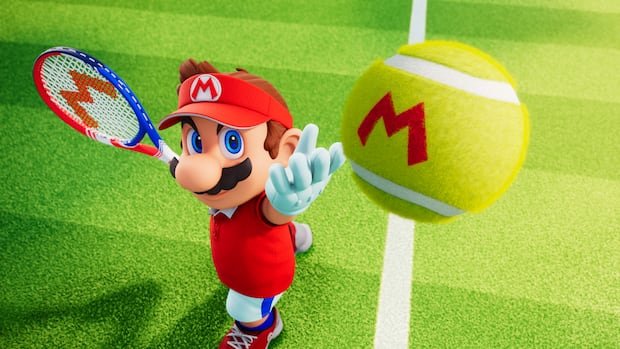
Enthusiasm for the latest installment of the well-established sports series, Mario Tennis Fever, may vary based on players’ familiarity with past entries. Since 2000, Nintendo’s iconic character, Mario, has been showcasing his tennis skills in this spinoff created by Japanese third-party studio Camelot. Mario Tennis Fever, the ninth release in the series, is now available for the Switch 2 console. While Mario has been a tennis enthusiast for quite some time, making appearances even back in 1984’s Tennis for Game Boy, the game still manages to bring new excitement to the court.
The core gameplay of Mario Tennis Fever continues to offer intense and thrilling tennis matches, coupled with a wide range of options and imaginative features. However, fans who have been playing the series for a long time may find the single-player Adventure mode somewhat lackluster. Nevertheless, the game adds value to the exclusive games lineup of the Switch 2, which has had mixed success since its launch.
Accessible to players of different skill levels, Mario Tennis Fever offers simple gameplay mechanics that anyone can grasp. Players can select characters from the vast Mario universe to engage in singles or doubles matches. The on-court action, with players running around and hitting tennis balls, remains as enjoyable as ever. The controls are precise and responsive, provided players understand their characters’ strengths and weaknesses. The vibrant colors of the game’s arenas, reminiscent of typical Mario settings, combined with realistic court surfaces, add to the immersive experience.
Each character in Mario Tennis Fever falls into distinct play styles such as speedy, powerful, and technical. Mario, for instance, serves as an all-around character suitable for newcomers, while heavyweights like Donkey Kong and Bowser excel in power but move slower. Some characters, like Rosalina and Koopa Troopa, introduce unique gameplay mechanics that require players to adapt their strategies accordingly.
The introduction of Fever rackets adds a new dimension to gameplay, offering special shots that can unleash various effects on the court. These shots range from setting parts of the court on fire to creating clones of players. Matches often become intense as players aim to trigger these powerful shots, leading to chaotic yet thrilling rallies.
Mix It Up modes in Mario Tennis Fever further enhance the gameplay experience by introducing unconventional variations. Players can engage in modes like a giant pinball table or a Wonder mode that infuses surreal elements from the Super Mario series. Additionally, Swing mode allows players to use Joy-Con controllers as virtual rackets, reminiscent of past gaming experiences.
The single-player Adventure mode in Mario Tennis Fever presents a brief and quirky storyline, featuring tutorials and mini-games akin to Mario Party. However, the story may appear nonsensical to some players, serving more as a diversion than a substantial gameplay element. Despite its shortcomings, Mario Tennis Fever remains a solid choice for local multiplayer sessions, offering a refreshing take on tennis gaming in a market with limited options.
While Mario Tennis Fever delivers on its core gameplay experience, the underwhelming Adventure mode and limited Mix It Up modes may deter some players, especially considering the game’s higher price point on the Switch 2. Nonetheless, the game’s enduring appeal and engaging multiplayer features make it a standout title in the tennis gaming genre.